Custom Food Truck Wraps
Built Around the Service Window
Make the brand, cuisine, ordering point, and next step easy to understand on step vans, high-roof conversions, food trailers, coffee vehicles, ice cream trucks, and mobile kitchens. We design around service openings, menu zones, vents, access panels, lights, equipment clearances, and the operator's approved permit-display requirements—then print, laminate, and install in-house in Linden, NJ.
A Food Truck Wrap Has to Work Before, During and After the Order
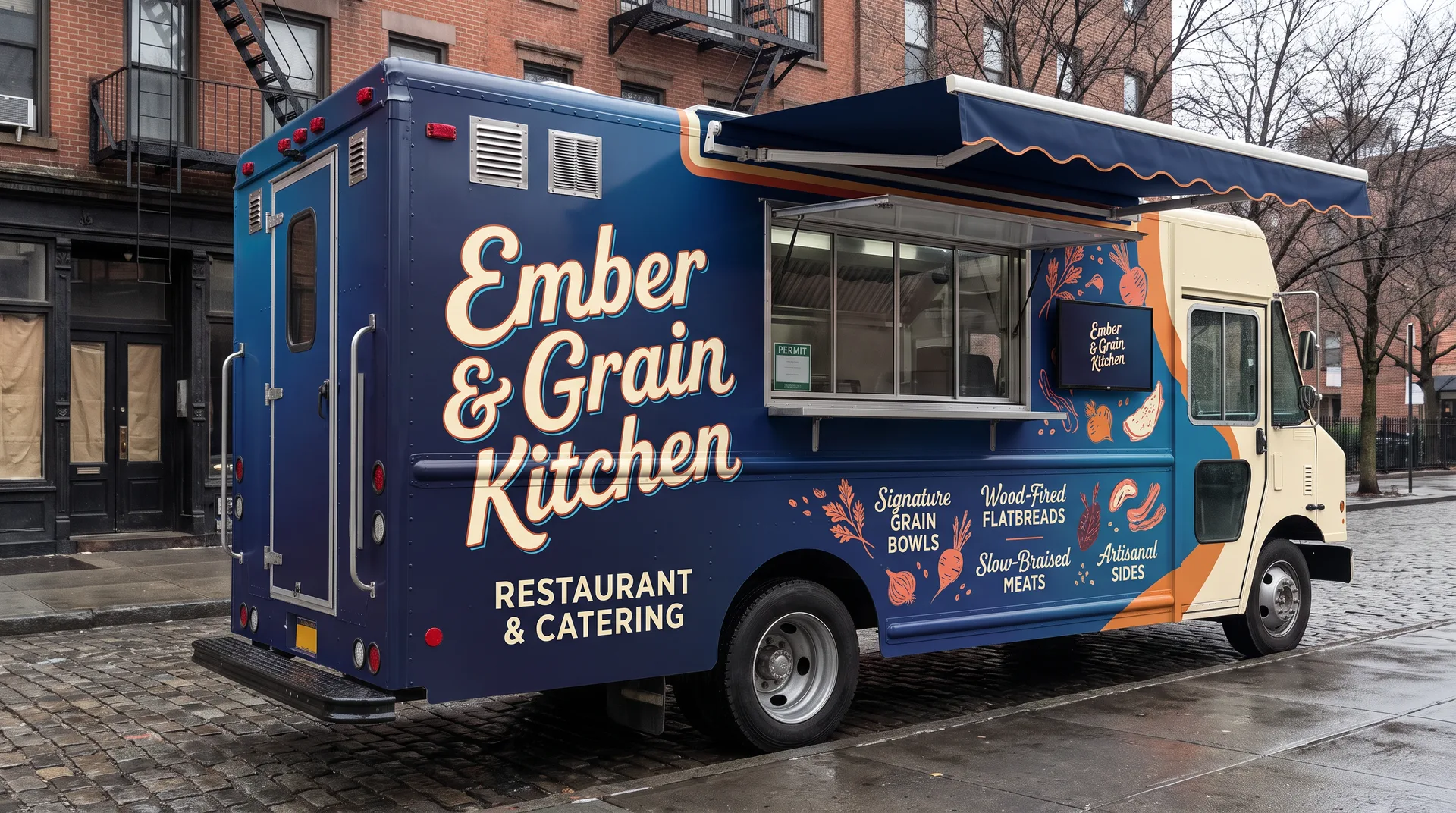
Before a customer reaches the window, the vehicle should answer three quick questions: who is serving, what kind of food or drink is available, and where the ordering line begins. At the window, the menu, pickup point, payment information, and approved operating details need a clear hierarchy that does not compete with the brand.
That hierarchy changes with the vehicle. A step van offers broad wall space but may have rivets, seams, vents, and service equipment. A high-roof van has curved panels and deep door gaps. A concession trailer adds fenders, towing hardware, lights, reflectors, shutters, and access doors. We map the creative to the real build so important elements do not disappear behind an open awning or land across a hot, moving, removable, or serviceable component.
Food-service vehicles also face grease, exhaust, repeated cleaning, outdoor storage, and frequent setup. Surface condition and cleaning practices matter to film performance. From our 10,000 sq ft Linden facility, we coordinate design, printing, lamination, preparation, and installation while helping operators plan stable brand graphics separately from menus, prices, permits, and other information that may need to change.
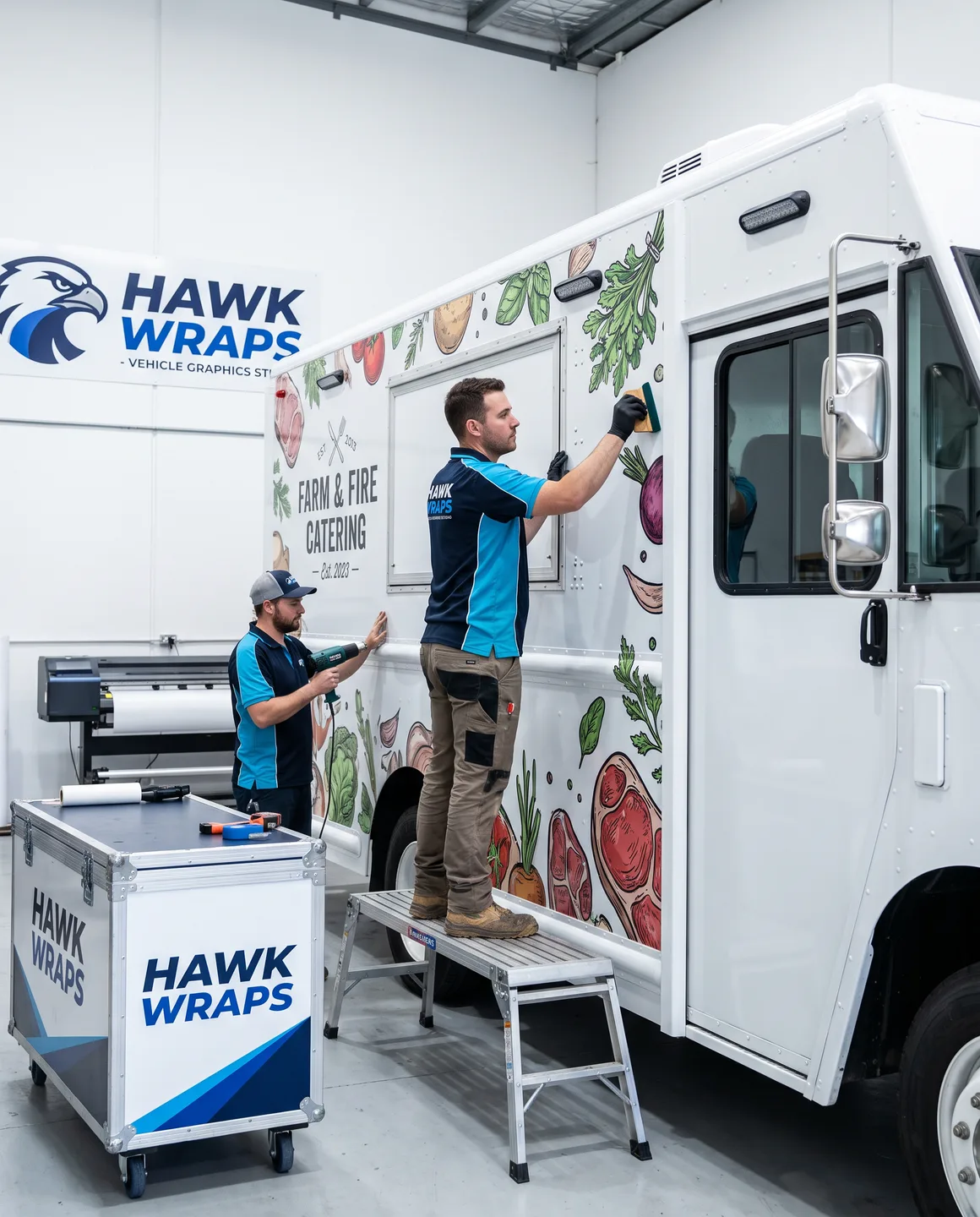
Wraps for Every Mobile Food Vehicle
Different mobile food formats need different wrap thinking. Here's how we approach each common vehicle type.
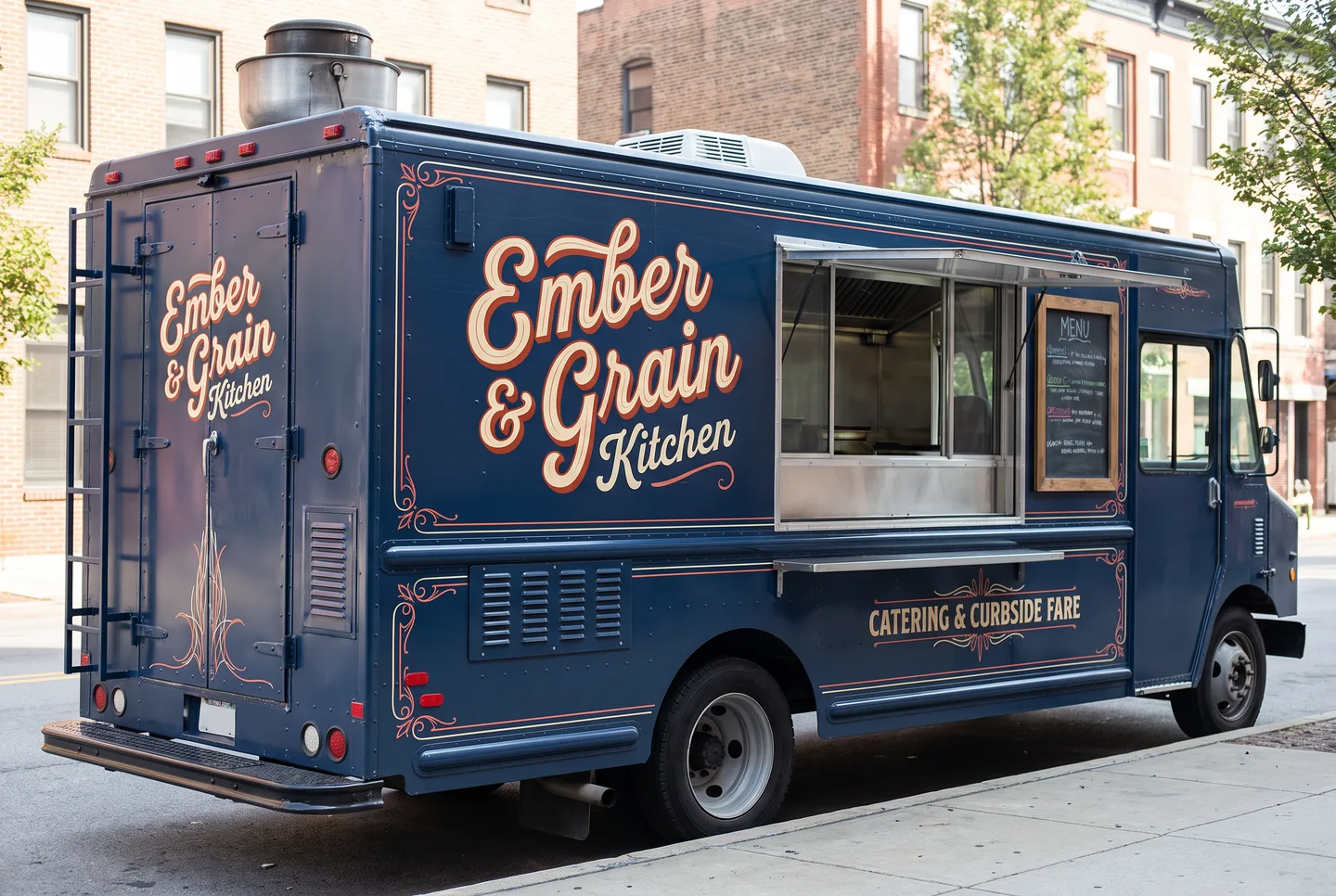
Step Van Food Trucks
Walk-in mobile kitchens with broad sides, high rooflines, service windows, and equipment-heavy conversions.
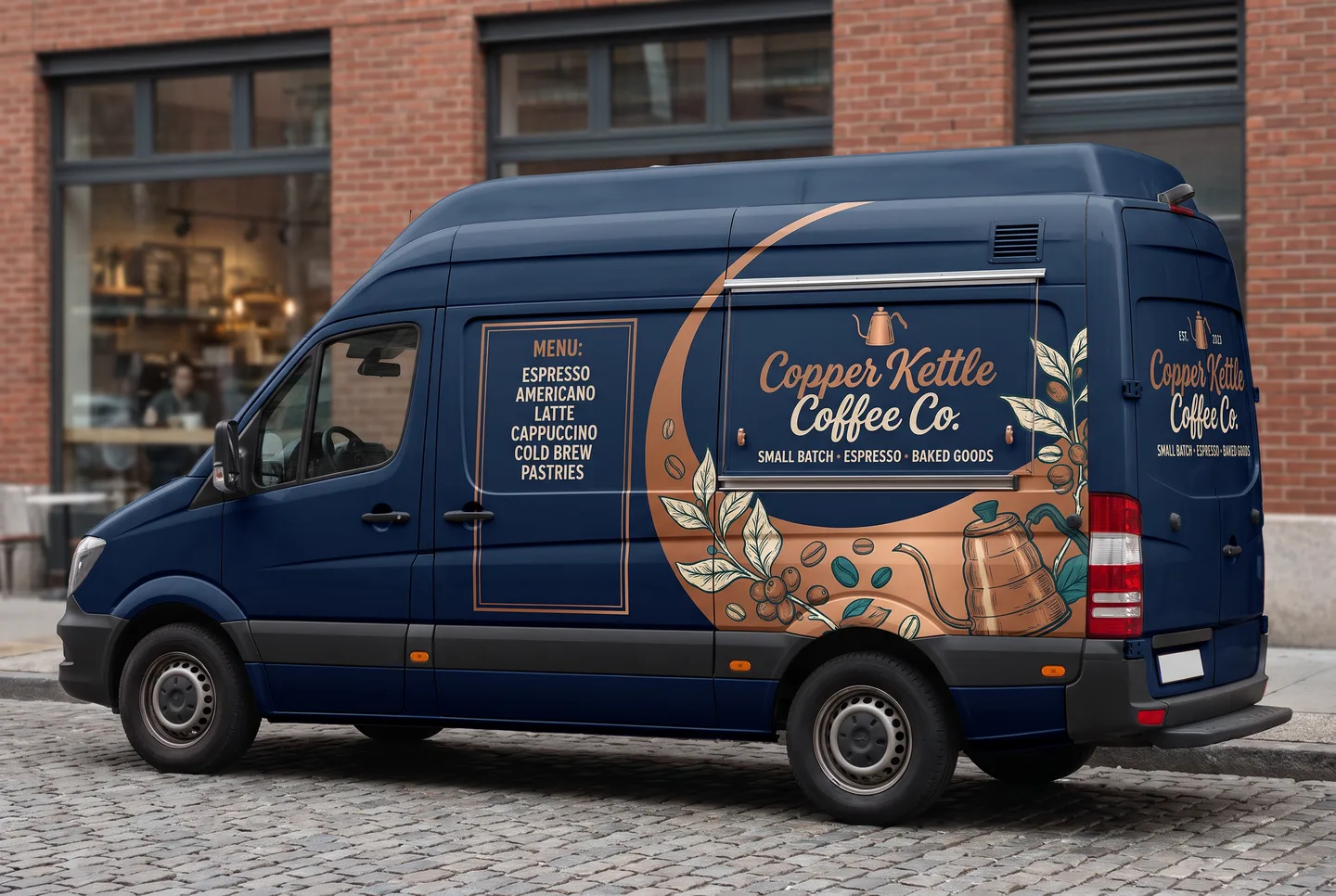
High-Roof Van Conversions
Sprinter, Transit, ProMaster, and similar high-roof vans converted for coffee, dessert, catering, and compact food service.
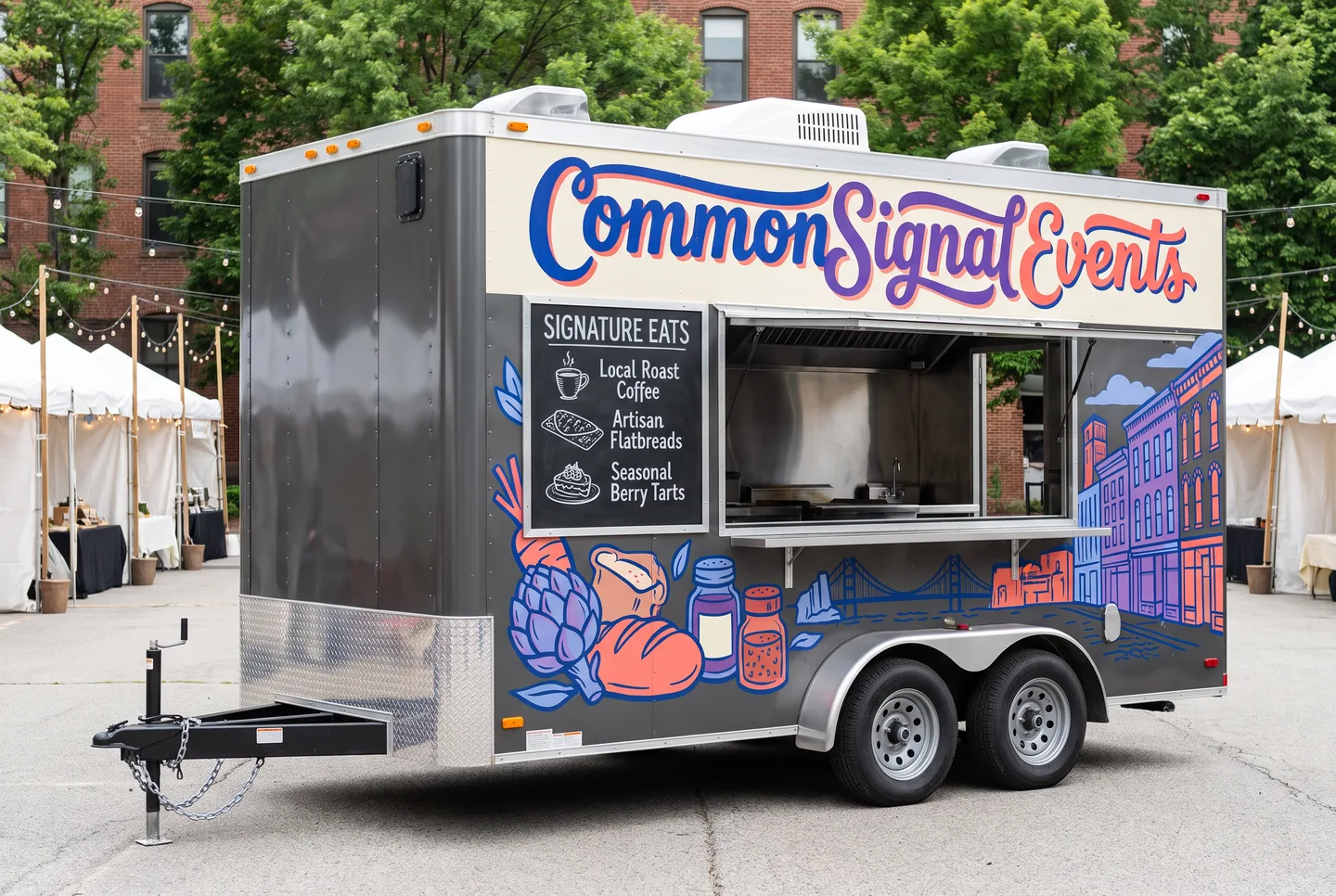
Food & Concession Trailers
Single- and tandem-axle trailers for festivals, catering, markets, fairs, pop-ups, and event service.
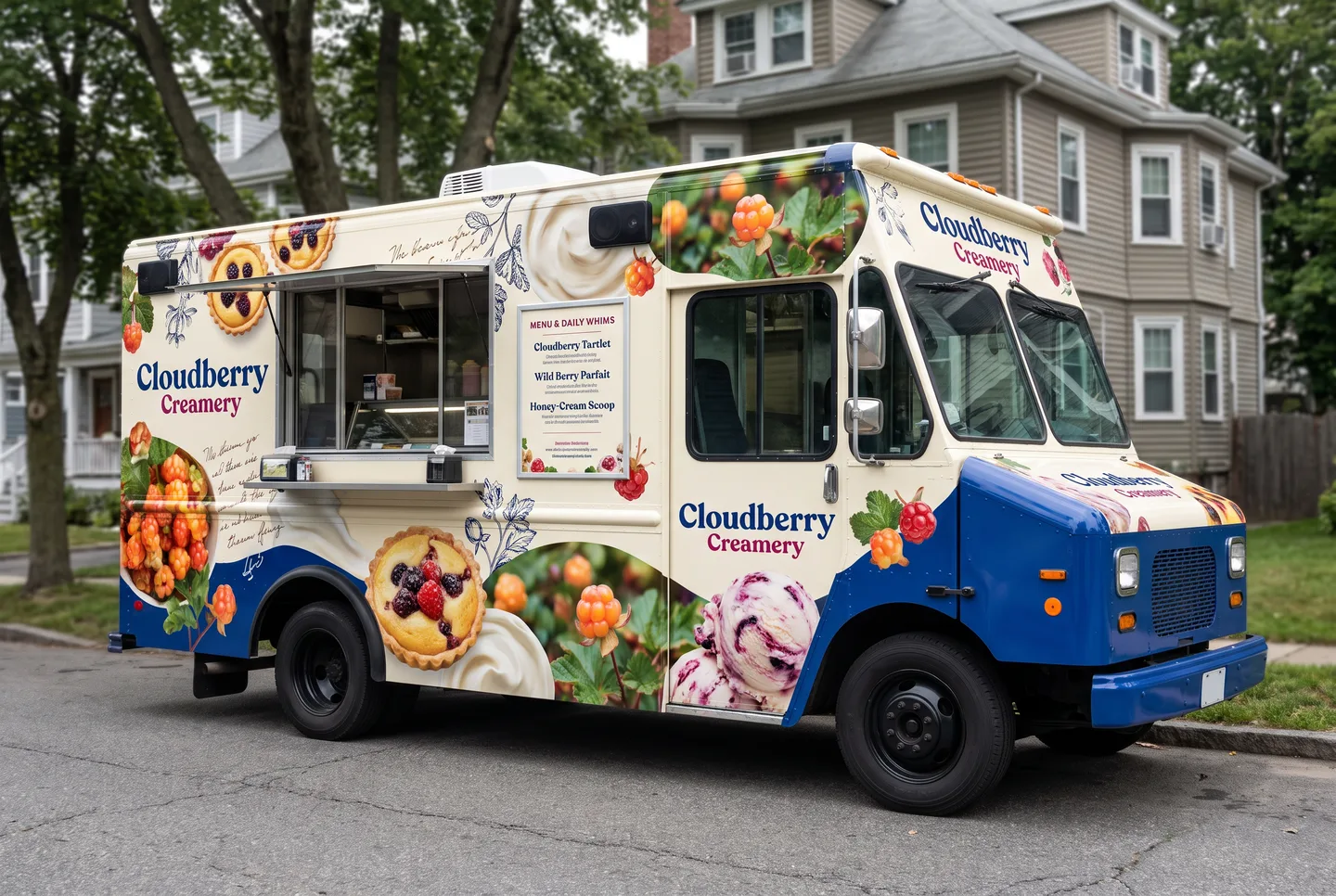
Ice Cream & Dessert Vehicles
Route-based ice cream trucks and dessert concepts serving neighborhoods, markets, festivals, and events.
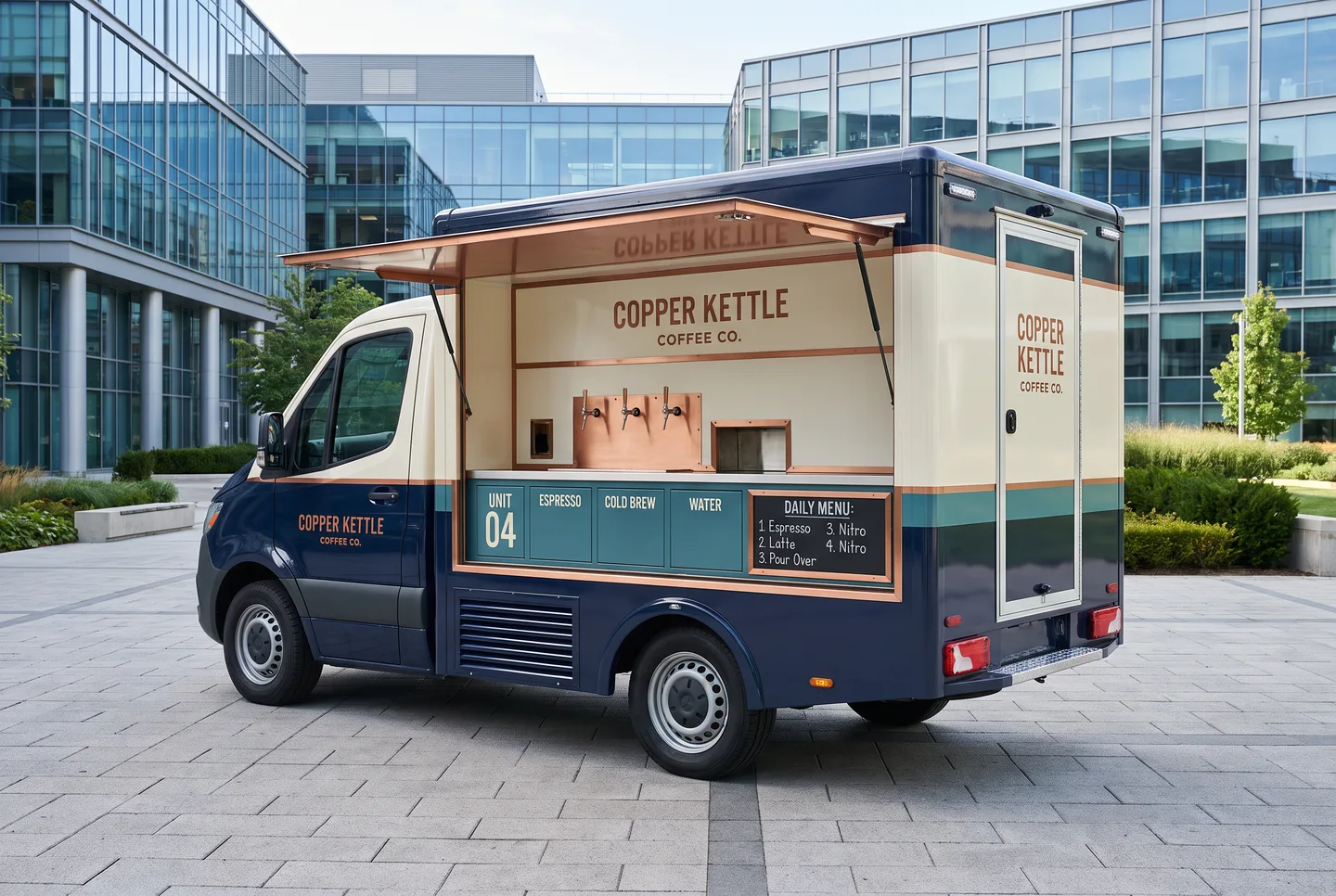
Coffee & Beverage Vehicles
Mobile coffee, tea, juice, beverage, mocktail, and bar-service concepts on vans, trucks, and trailers.
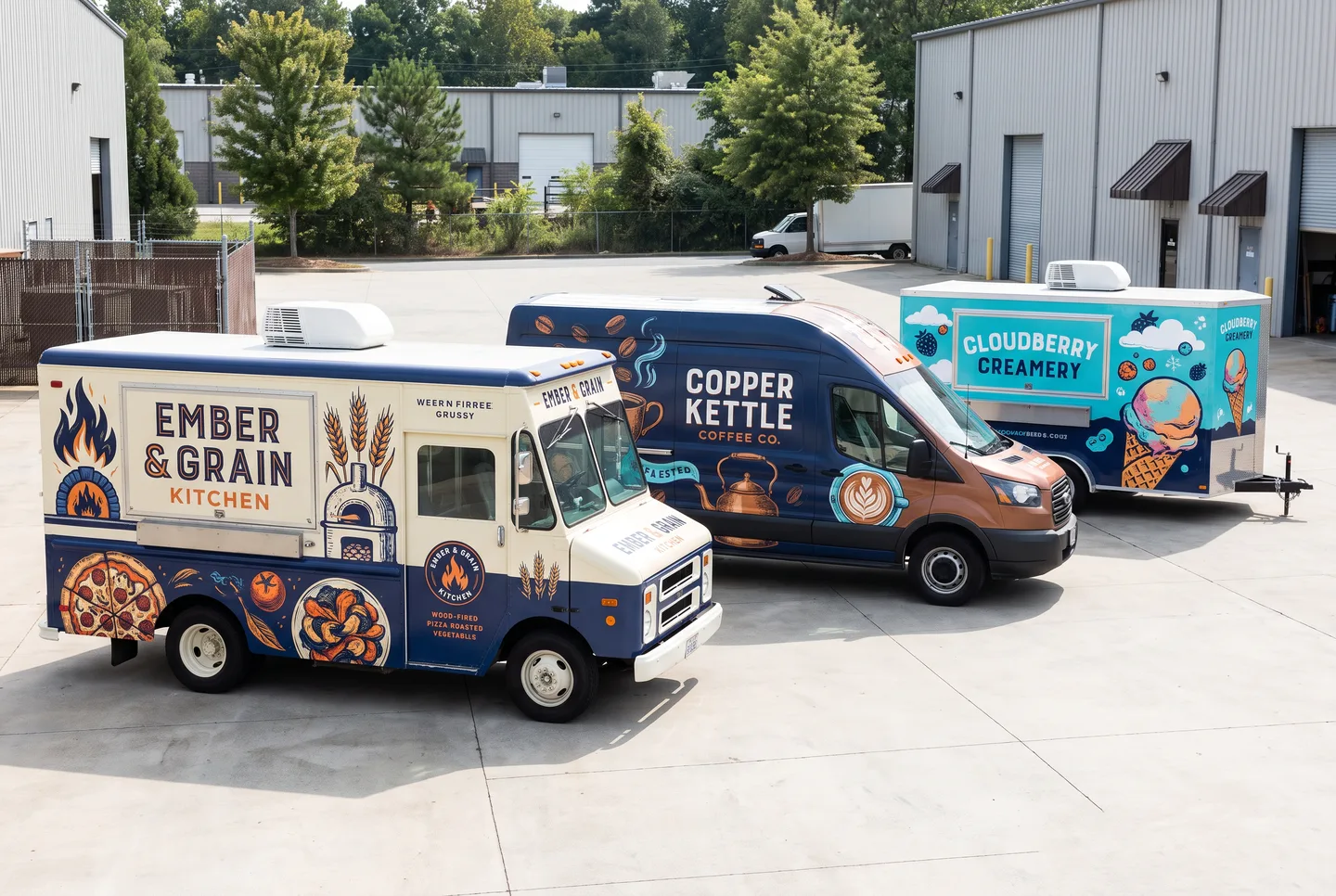
Restaurant, Catering & Multi-Unit Fleets
Restaurant extensions, caterers, commissaries, franchise systems, ghost kitchens, and growing mobile-food fleets.
Food Truck Wrap Cost Factors by Vehicle Type
Size matters, but the conversion, surface condition, equipment layout, old graphics, artwork, and changing information often have a greater effect on scope.
| Vehicle Type | Common Use | Design Focus | Quote Considerations |
|---|---|---|---|
| Compact Food Trailer | Markets, fairs, pop-ups and focused menus | Distance recognition and service-side hierarchy | Dimensions, body material, seams, axle/fender areas, shutters and equipment |
| Large Concession Trailer | Festivals, catering and high-volume events | Long-view identity, ordering zones and multiple service openings | Length, doors, awnings, vents, utilities, reflectors, surface condition and access |
| High-Roof Food Van | Coffee, dessert, catering and compact concepts | Brand continuity across curved panels and doors | Conversion openings, glass, body curves, sensors, hardware and coverage |
| Step Van Mobile Kitchen | Route, curbside, corporate and event vending | Cuisine recognition, service-window framing and menu strategy | Body construction, rivets, seams, old graphics, vents, hot zones and access doors |
| Custom Brand Launch | New concepts and restaurant extensions | Message hierarchy, illustration, pattern and repeatable brand assets | Artwork development, revision scope, approvals, menu status and launch dependencies |
| Ice Cream / Dessert Vehicle | Neighborhood routes, markets and events | Quick category recognition and product-display support | Display window, audio equipment, menu changes, doors, lights and required markings |
| Refresh / Rewrap | Updated brand, menu strategy or worn graphics | New system built on verified usable surfaces | Film age, removal, adhesive, paint and repair condition, corrosion and preparation |
An accurate quote may include design, printing, lamination, old-graphic removal, adhesive cleanup, surface preparation, installation, changeable-menu components, and fleet file adaptation as separate scope items. Send current photos of every side with windows and awnings both open and closed, vehicle or trailer dimensions, build status, artwork, menu plan, approved display requirements, fleet count, and target date.
Choose the Starting Point That Matches Your Brand
A Food-Vehicle Workflow Built Around the Real Build
Review the Completed Food-Vehicle Build
Conversion bodies are not standardized. We review photos, measurements, materials, windows, awnings, seams, rivets, vents, doors, lights, equipment, hot zones, and access requirements before the layout is approved.
Design Around the Ordering Experience
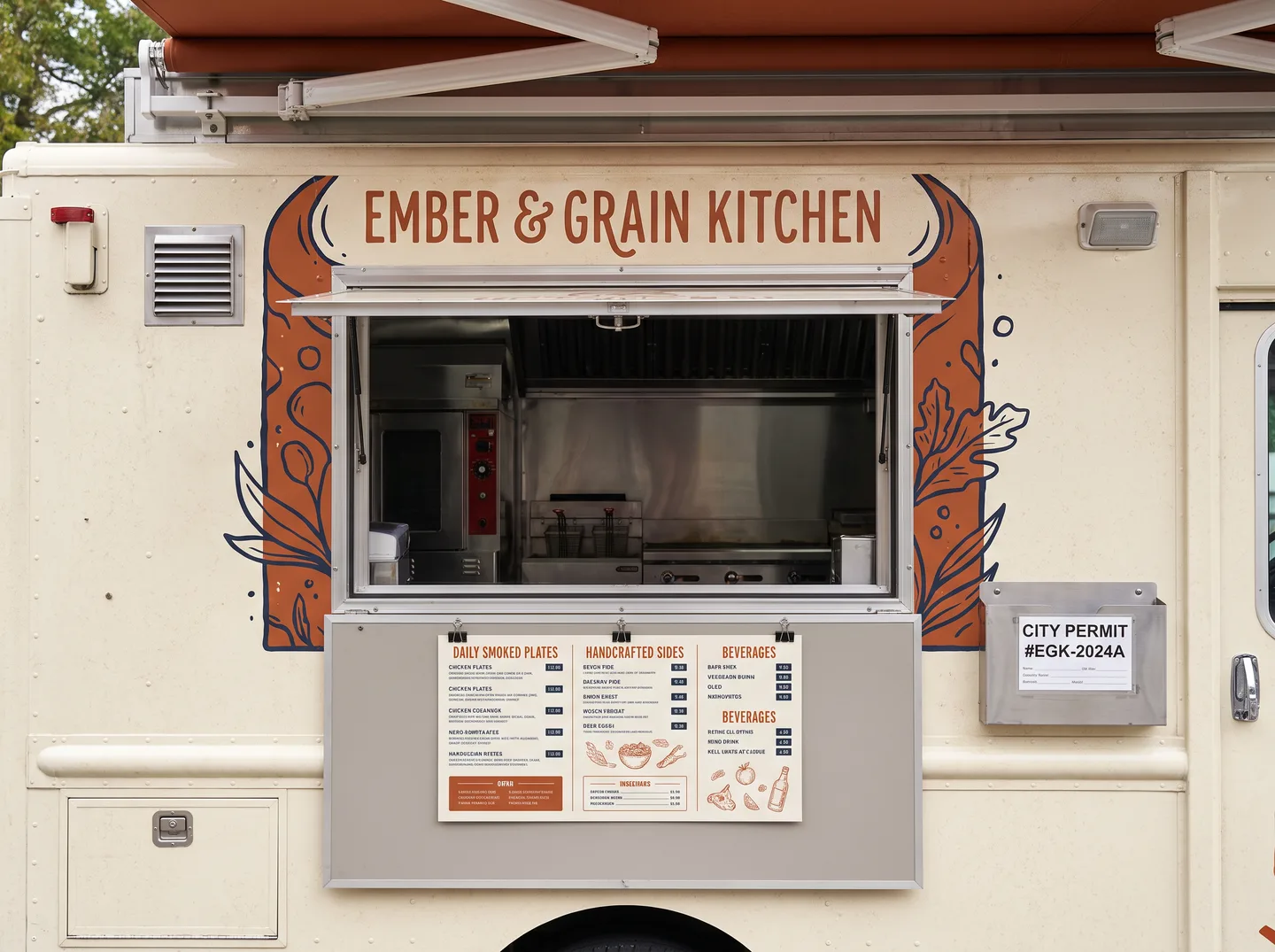
The brand, cuisine, ordering point, pickup area, and menu should not compete for attention. We organize the service side around viewing distance and customer flow, then check how it reads with shutters and awnings open.
Separate Permanent and Changeable Content
Permanent brand graphics belong in durable locations. Menus, prices, permits, event details, and seasonal offers may need planned update zones so routine changes do not require replacing the entire wrap.
Build From Operator-Approved Requirements
The operator confirms current health, fire, vending, vehicle, event, and local display rules. We incorporate the approved wording, size, contrast, placement, and clear zones supplied in writing without claiming to replace regulatory review.
Plan Backward From the Launch
Opening dates depend on the completed build, final artwork, approved menu and permit content, material availability, preparation, and shop access. We surface those dependencies early and set the production schedule after scope review.
Keep Production Under One Roof
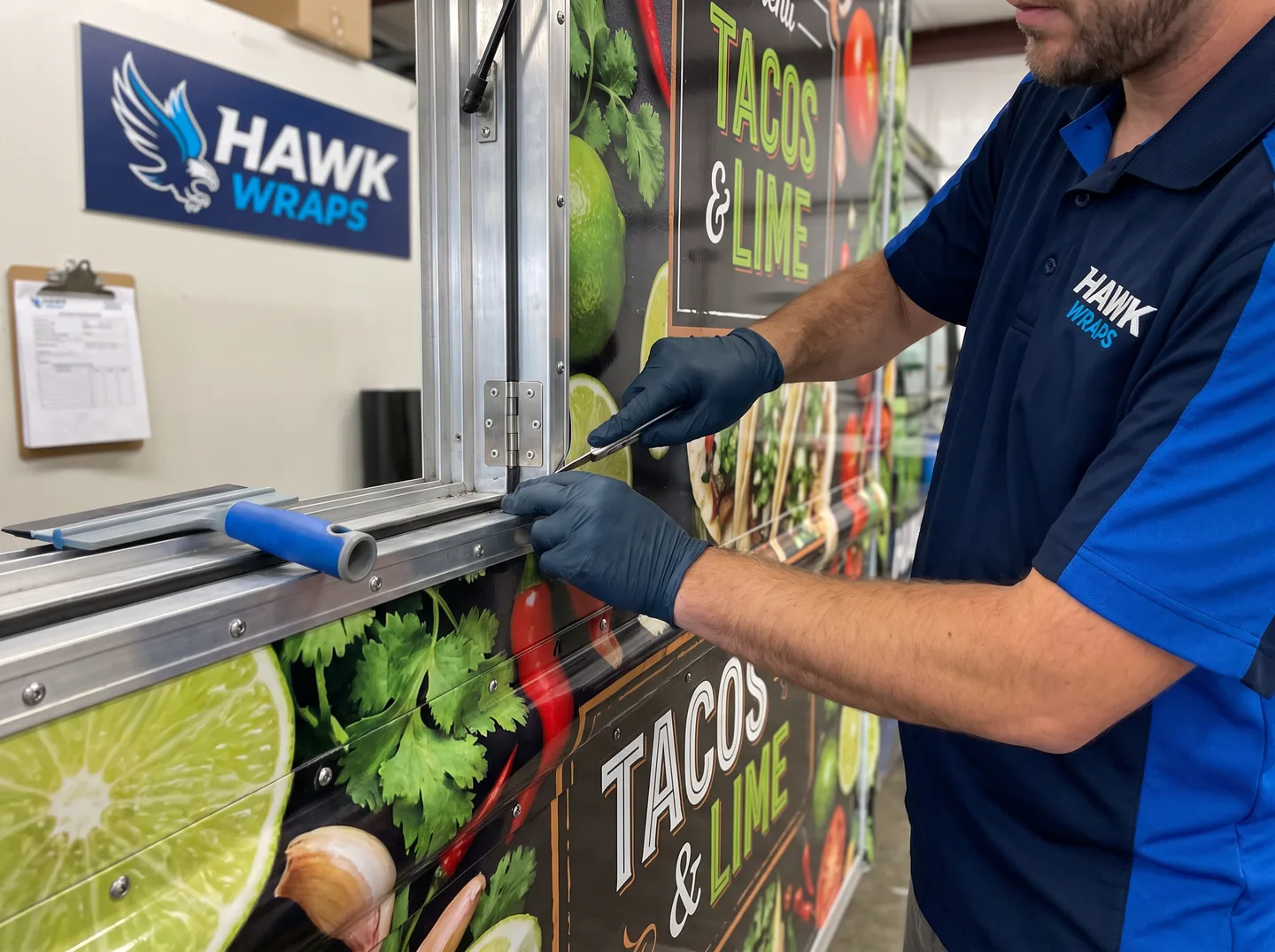
Design, printing, lamination, panel preparation, and installation are coordinated inside our 10,000 sq ft Linden, NJ facility, keeping revisions and production handoffs under one roof.
See How the Layout Changes With the Operating Model
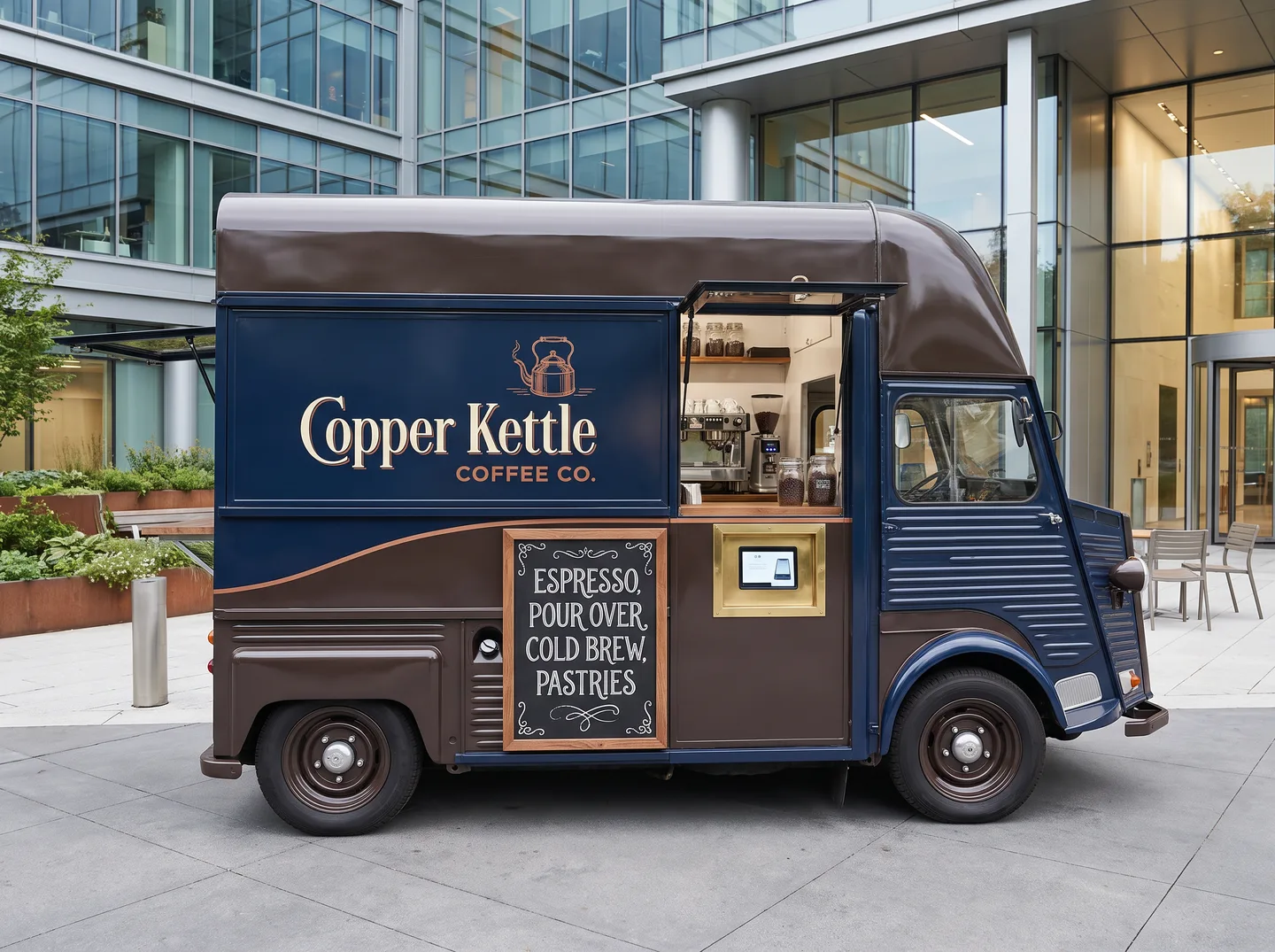
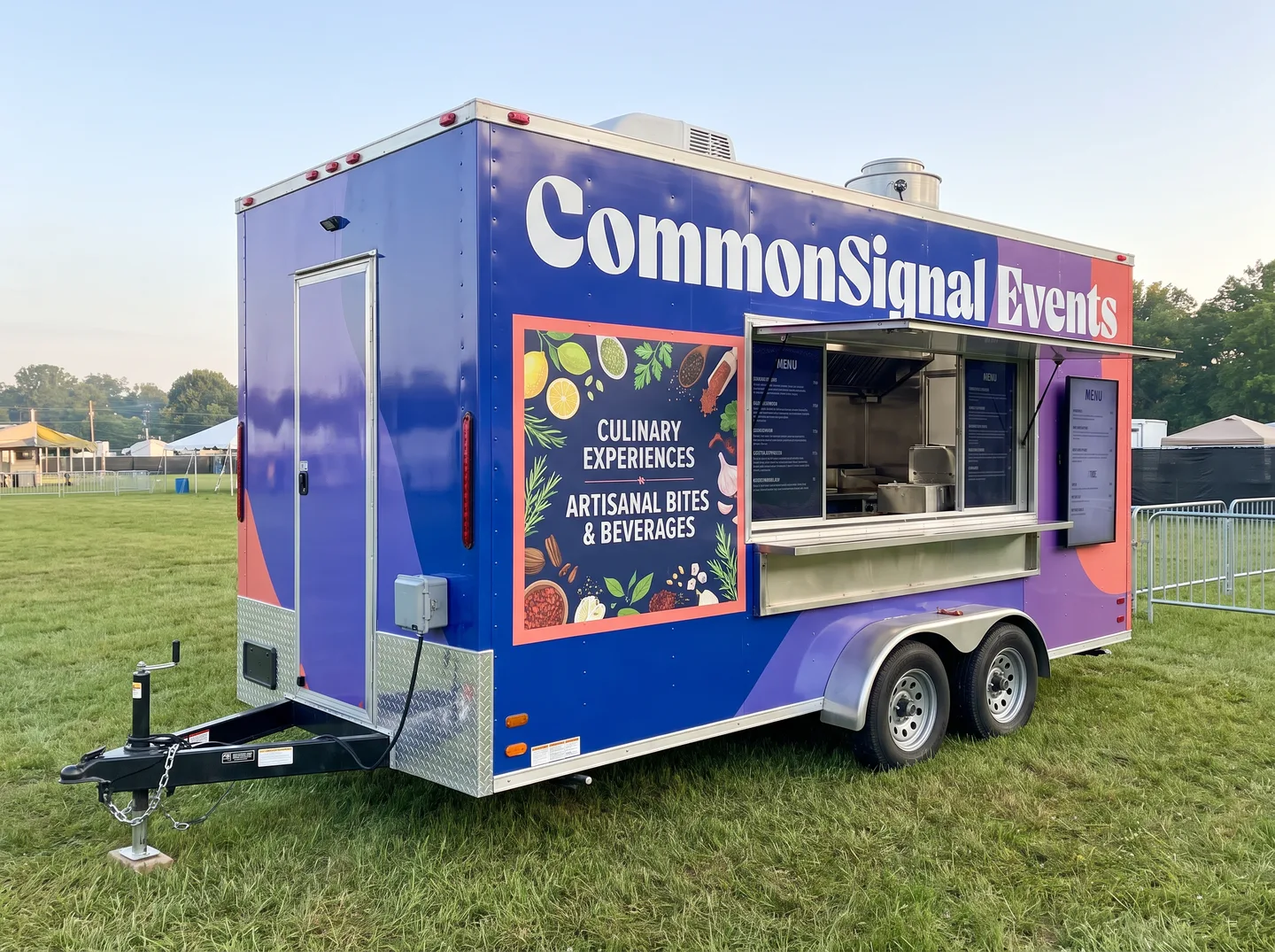
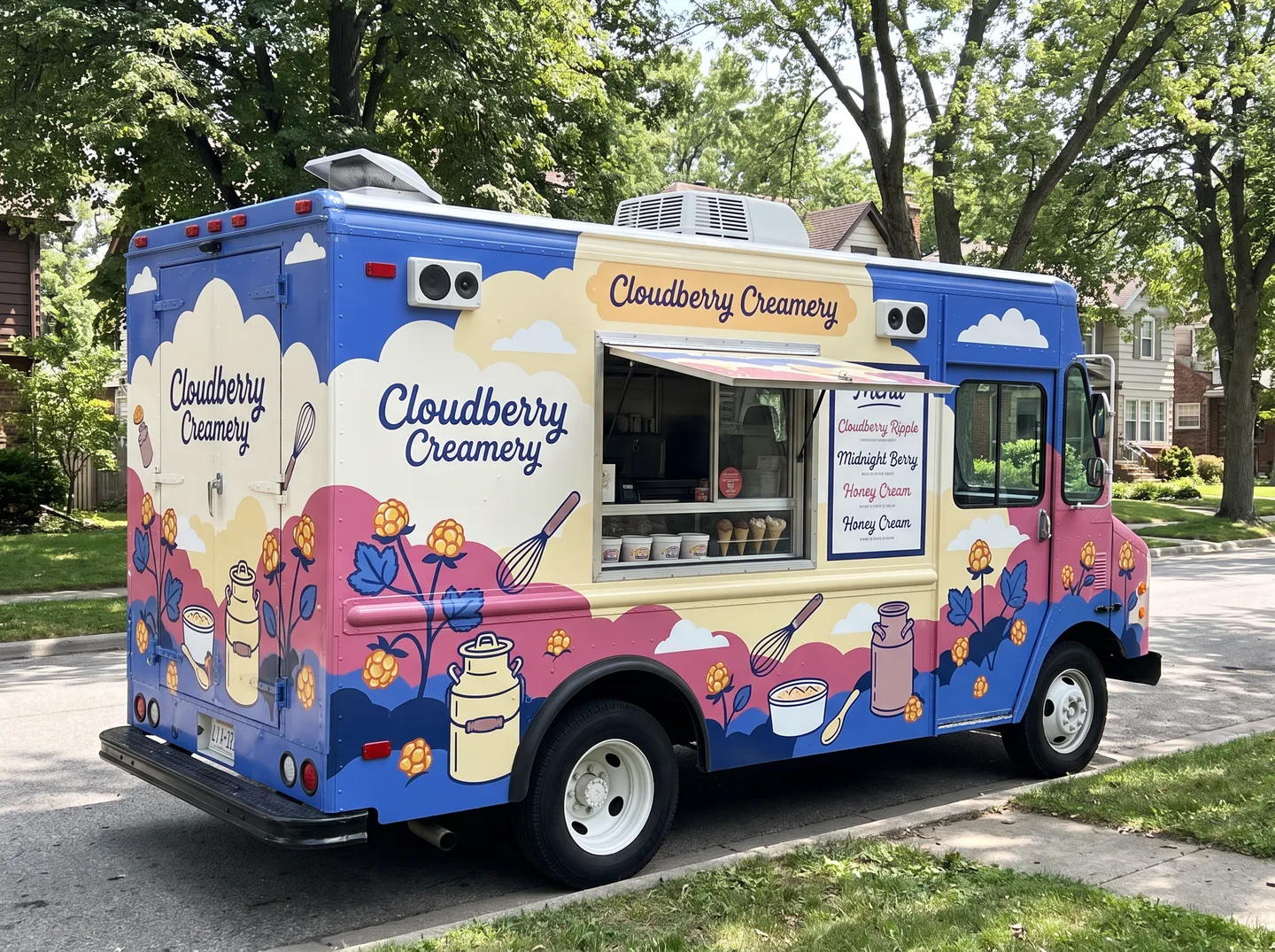
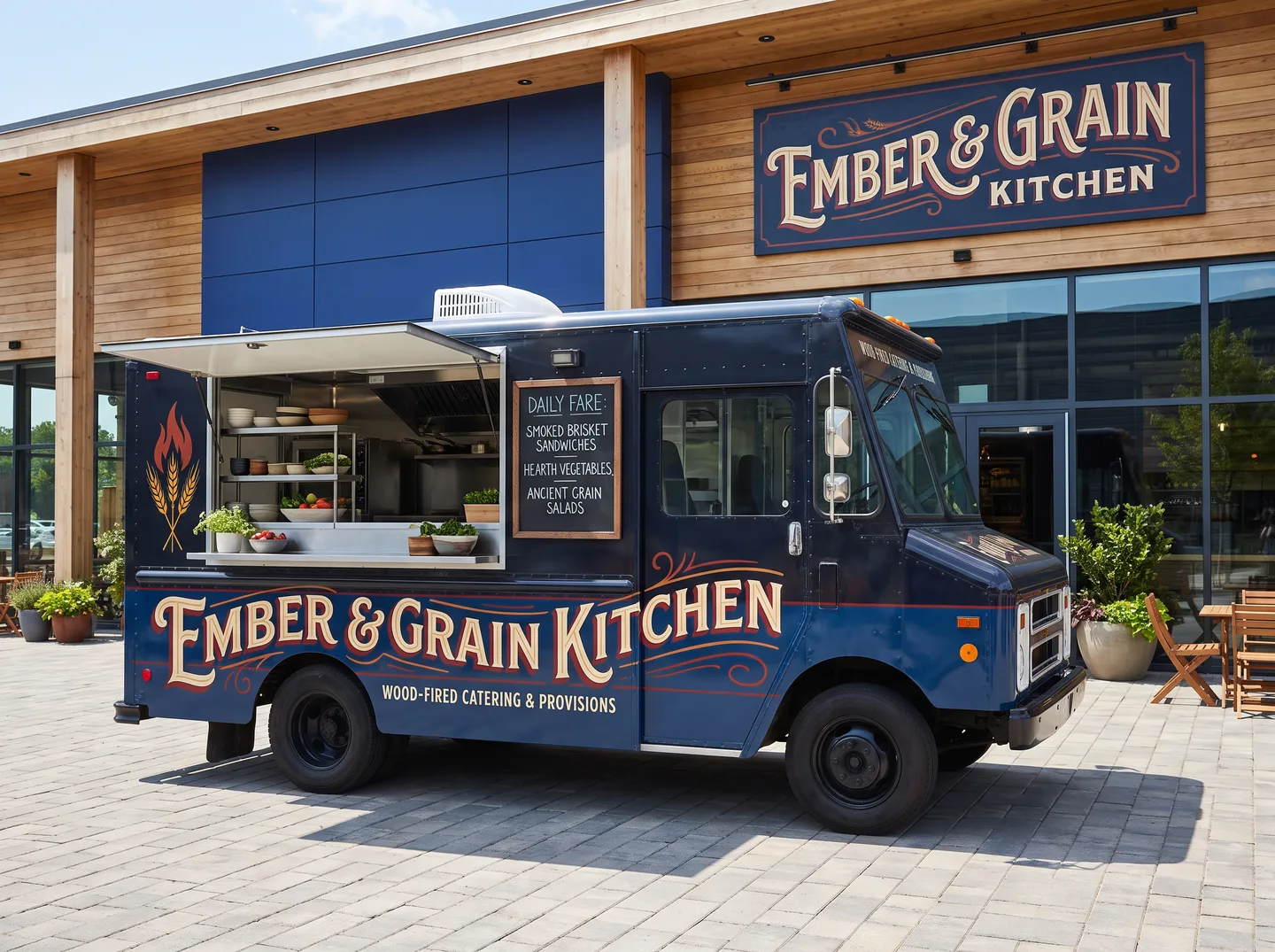
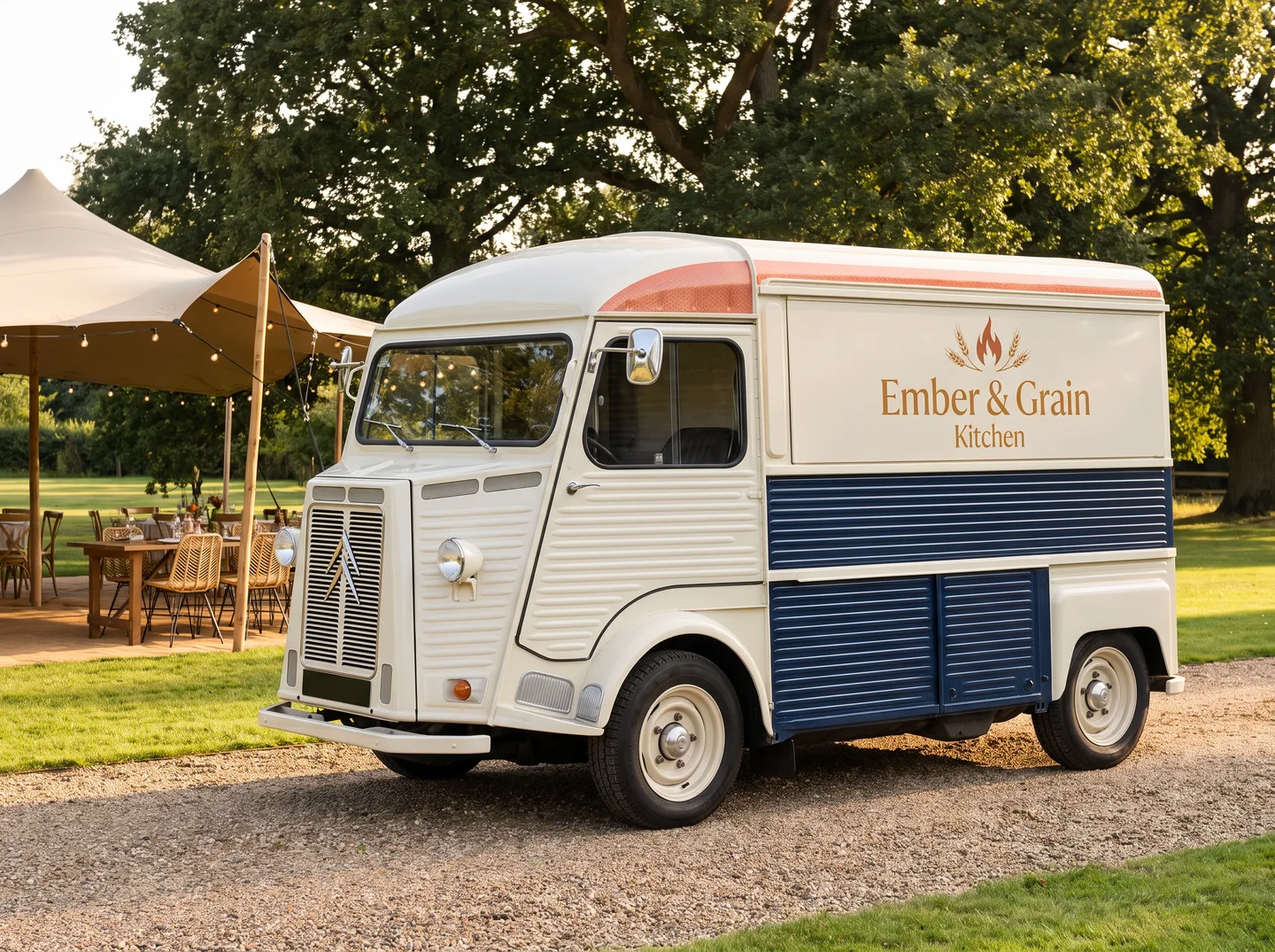
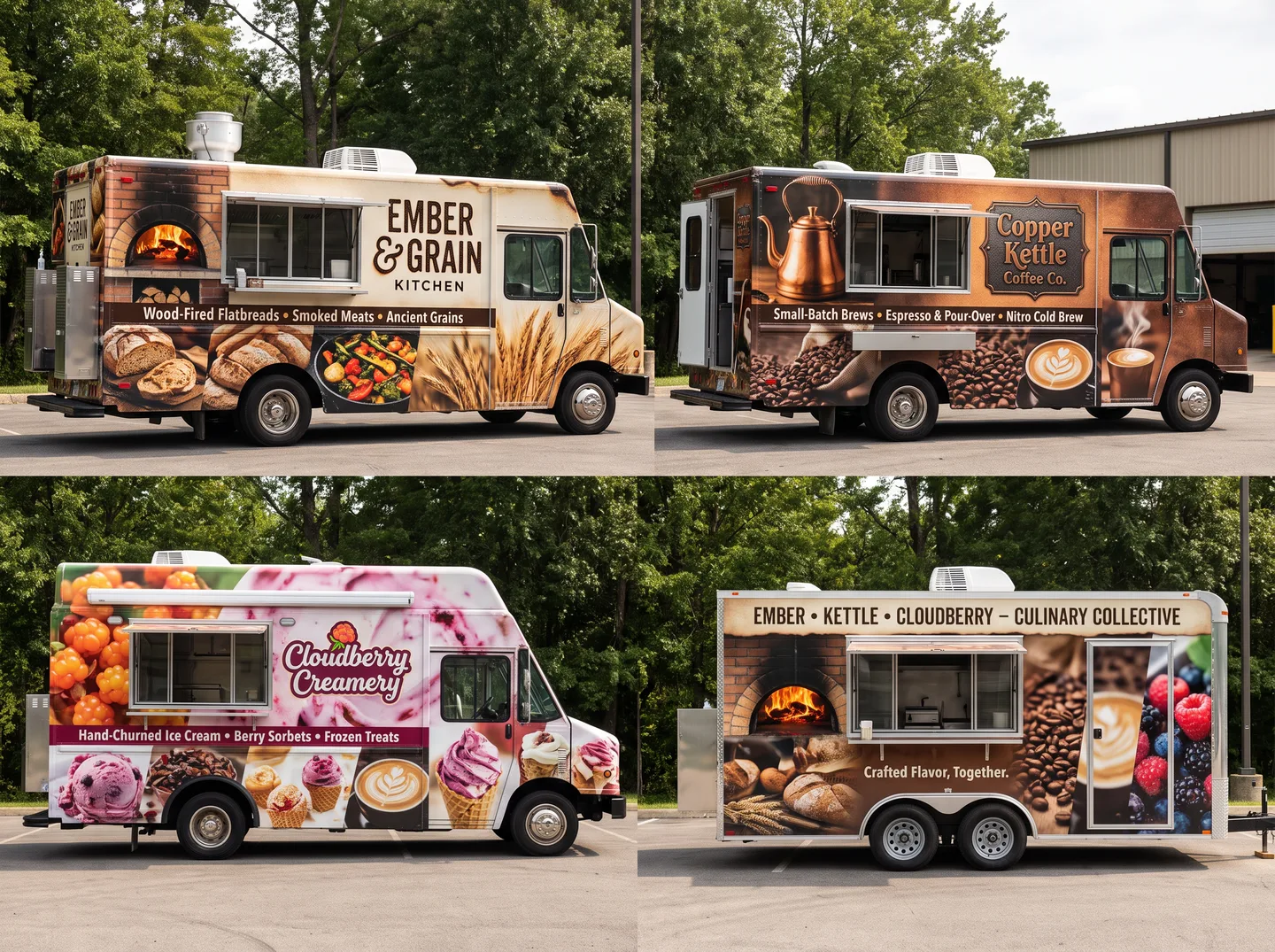
These planned image slots cover the visual directions needed for curbside, route, festival, catering, beverage, dessert, trailer, and fleet applications.
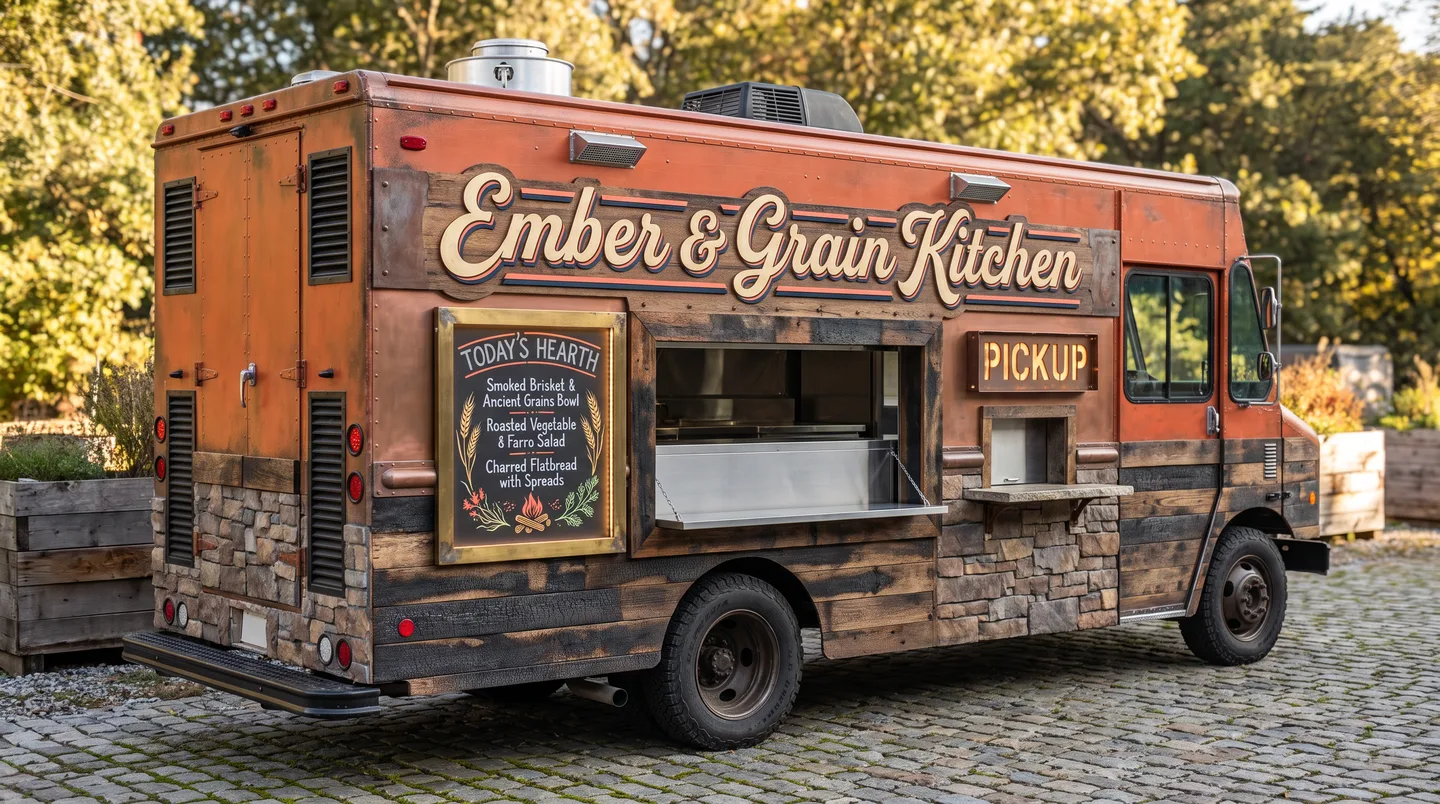
Mobile Food Operators We Wrap For
Each operating model changes the customer flow, message priority, menu strategy, vehicle choice, and frequency of graphic updates.
| Operator Type | Typical Vehicle | Wrap Intent |
|---|---|---|
| Independent chef & street-food concepts | Step van or high-roof conversion | Immediate brand and cuisine recognition with a clear ordering side |
| Restaurants & franchise systems | Mobile kitchen, van or trailer | Translate the established identity without copying storefront layouts blindly |
| Caterers & corporate dining | Van, step van or trailer | Professional arrival presence for workplaces, weddings and private events |
| Festival, fair & market vendors | Food or concession trailer | Distance-readable identity and flexible menu or event-information zones |
| Coffee, tea & beverage operators | High-roof van, truck or trailer | Close-range menu clarity around counters, taps, awnings and equipment |
| Ice cream, bakery & dessert brands | Route truck, step van or compact trailer | Quick category recognition and product-display support |
| Breweries, wineries & mobile bar service | Trailer or converted truck | Event-ready brand graphics with operator-approved alcohol and permit information |
| Ghost kitchens & delivery-first brands | Van or compact mobile unit | Create physical brand visibility while supporting pickup and event use |
| Experiential agencies & sampling programs | Temporary mobile kitchen or branded trailer | Campaign graphics coordinated with event schedule, approvals and removal plan |
| Multi-unit mobile food fleets | Mixed step vans, vans and trailers | Consistent recognition with unit-, market- and menu-specific adaptations |
Our Food Truck Wrap Process
The sequence stays consistent, while timing depends on build completion, surface condition, artwork, approvals, materials, preparation, and shop access.
Step 1 — Build, Brand & Scope Review
We review the vehicle or trailer, conversion status, surface and old graphics, service openings, equipment, operating model, brand assets, menu plan, fleet count, target date, and written permit-display requirements. Photos should show awnings and windows open and closed.
Step 2 — Service-Side Design & Approval
The layout is built around the actual unit and customer flow. Proofs show the ordering side, non-service side, front, and rear; distinguish durable brand areas from changeable information; and preserve operator-identified clear zones. Production follows written approval.
Step 3 — Print, Laminate & Stage
Approved graphics are printed, laminated where specified, finished, labeled, and organized by vehicle and panel. Fleet adaptations and separate changeable elements are checked against the approved files before installation.
Step 4 — Preparation, Installation & Review
Accessible surfaces are inspected and prepared for the selected film system. Graphics are installed around the approved openings, hardware, equipment, seams, and clear zones. Final review checks alignment, edges, moving components, and the signed layout; the operator completes required inspections before service.
One Visual System Across the Route, Queue and Event
The same vehicle may need to attract attention from across a festival, identify the cuisine at curbside, organize a customer line, frame a service window, support a photograph, and arrive professionally at a catered event. A strong system gives each viewing distance a job instead of forcing every message onto one panel.
Food Truck Wrap Frequently Asked Questions
How much does it cost to wrap a food truck?
How long does it take to wrap a food truck?
How do you handle health-department permit visibility?
Can you design the menu directly into the wrap?
How long do food truck wraps last?
Can you wrap a food truck before it's fully built out?
Do you do multi-truck brand consistency for growing food brands?
What's the difference between a food truck wrap and a food truck paint job?
Can you wrap a food trailer separately from the tow vehicle?
Will pressure washing damage the wrap?
Can you wrap an ice cream truck or dessert truck differently than a standard food truck?
What if I'm leasing my food truck — can I still wrap it?
Food Truck Wrap Service Area
Hawk Wraps serves mobile-food operators across New Jersey, New York City, Connecticut, and Pennsylvania from our 10,000 sq ft Linden, NJ facility. Send the vehicle location, dimensions, build status, photos, and target operating date so we can review project and installation logistics.
Cities We Serve
Food Truck Wrap Reviews
Recent feedback from Hawk Wraps clients across New Jersey, New York, and Connecticut.
Opening our first food truck meant everything had to make a great first impression. Tito spent time reviewing our artwork and pointed out a few adjustments that made the menu graphics easier to read without cluttering the design. The finished wrap looks incredible, photographs well for social media, and definitely helps us stand out at street festivals around Brooklyn.
We've had customers walk up and tell us they found us because they recognized the truck from driving around town. That's exactly what we wanted. Alex kept the project moving, answered every question quickly, and delivered a wrap that looks premium from every angle. It's become one of our best marketing investments.
Our truck parks in different locations every day, so branding is everything. Gabby was great throughout the project and made the approval process simple. The colors came out exactly as expected, and the installation around the serving window and equipment doors is incredibly clean. We've already recommended them to several other vendors.
Food trucks take a beating between daily service and constant travel, so we wanted materials that would last. Luis explained the different vinyl options without trying to oversell anything. The wrap still looks fantastic months later despite being used almost every day. Customers constantly take photos of the truck before ordering.
From the initial design consultation through installation, the communication was excellent. Tito coordinated everything around our event schedule so we didn't miss any bookings. The truck now looks exactly like the brand we envisioned, and we've noticed more people stopping simply because the truck catches their attention.
Request a Food Truck Wrap Quote
Tell us about the vehicle, build status, cuisine, service-window layout, menu plan, artwork, approved display requirements, and target date. Photos of every side help us review the scope.