Frequently Asked Questions Plan the Wrap With
Plan the Wrap With
Better Questions Up Front.
Use this guide to understand cost drivers, coverage, materials, design, installation, fleet scheduling, care, owner-supplied markings, leased vehicles, and inspection-led removal. Project-specific terms are confirmed in the written proposal.
25+ YearsVinyl Experience
35+ FAQsAcross 9 Categories
3M CertifiedInstaller Standard
24-HourQuote Response
Browse by Category
What Are You Trying to Figure Out?
Cost & Pricing
7 questionsHow much does a vehicle wrap cost?
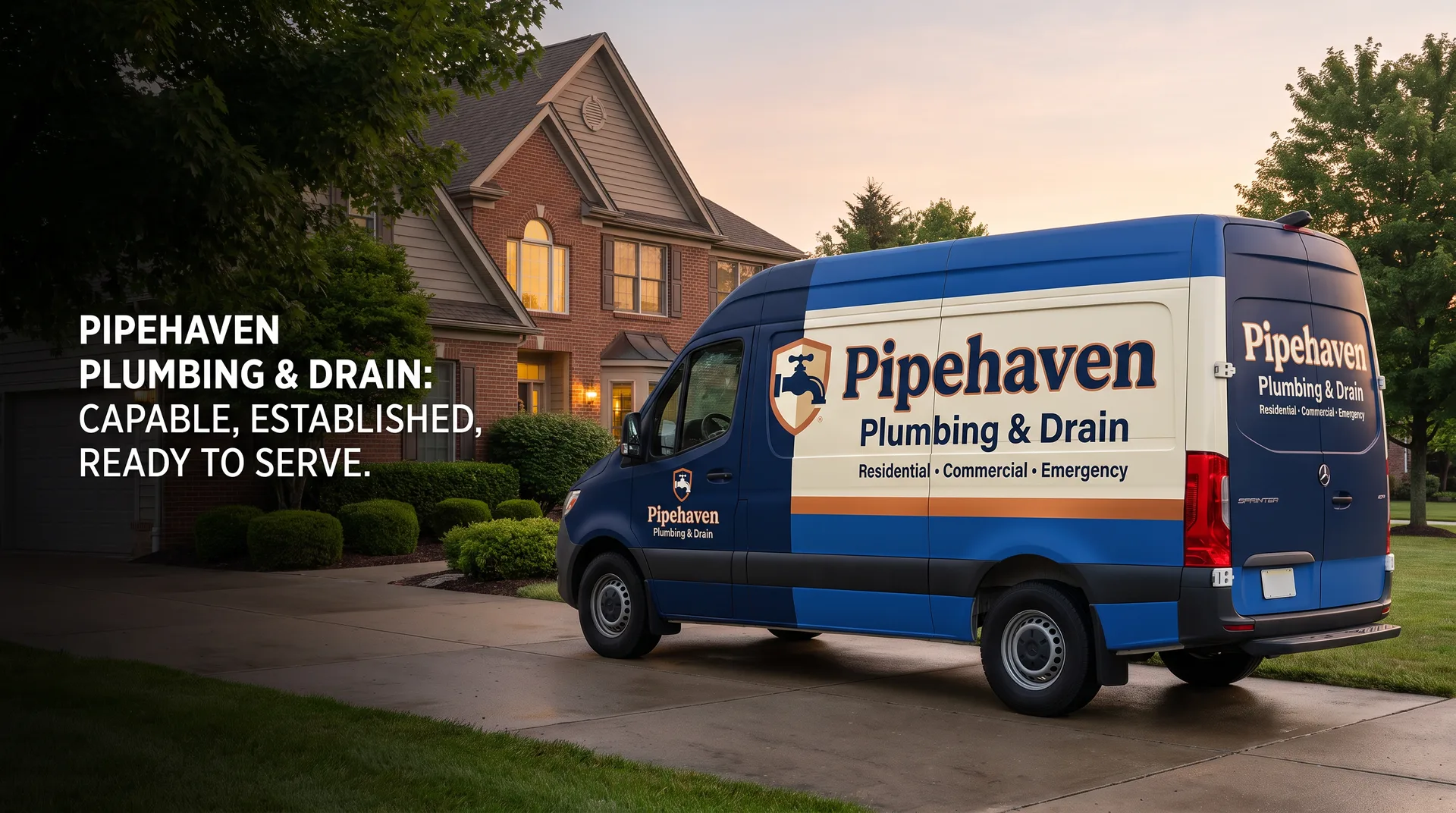
It depends on the vehicle and coverage level. Starting ranges: cars $1,500–$3,500, pickups $1,500–$4,500, vans $1,800–$5,200, box trucks $2,000–$7,000, trailers $3,500–$9,500, buses $3,000–$12,000, food trucks $3,500–$8,000. Final pricing depends on design complexity, surface condition, and material grade. Every quote includes design, premium cast vinyl, UV lamination, and installation — no hidden add-ons.
What's included in a quoted price?
Custom design (with unlimited revisions until you approve), premium cast vinyl (3M IJ180Cv3, Avery MPI 1105, or Oracal 3951RA), UV-protective laminate, and professional installation at our Linden, NJ facility. Brokerage compliance review (for real estate), DOT compliance design (for commercial vehicles), and photo documentation are also included. We don't quote design and install separately.
What's the difference between a full and partial wrap cost?
A full wrap covers every exterior surface — both sides, rear, hood, and optional roof. A partial wrap covers the highest-impact surfaces (typically sides and rear) while leaving hood and roof in original paint. Partial wraps run roughly 40–60% of full wrap pricing. For white commercial vans, partial wraps often look indistinguishable from full wraps at a fraction of the cost.
Do you offer fleet or volume pricing?
Yes. 3–5 vehicles: 10% off. 6–10 vehicles: 15% off. 11–25 vehicles: 20% off. 25+ vehicles: custom pricing, typically 20–25% off. Volume discounts apply across mixed fleet types (vans + trucks + trailers in a single coordinated project).
Do you require a deposit?
Projects under $2,000: no deposit, invoice on completion. $2,000–$10,000: 50% deposit, balance on completion. Larger fleet projects: 40% deposit at design approval, 30% at production start, 30% at delivery. Net-30 terms available for established corporate accounts with credit approval.
Do you offer financing?
For projects over $5,000, we partner with standard commercial equipment financing programs that can spread payments over 12, 24, or 36 months. We can introduce you to the financing partner during the quote conversation. Most fleet projects qualify.
Why does pricing vary between competitors?
The biggest variable is vinyl grade. Cast vinyl (what we use) costs more than calendered vinyl, but lasts 4–5x longer on commercial use. Other variables include design quality, install precision (especially around rivets and curves), and whether printing and install are in-house or outsourced. A cheap wrap quote almost always means calendered vinyl from a brokered print supplier.
Materials & Durability
5 questionsWhat materials do you use?
Premium cast vinyl exclusively: 3M IJ180Cv3, Avery Dennison MPI 1105 Easy Apply RS, and Oracal 3951RA. For color change applications we also use Avery Supreme Wrapping Film and Oracal 970RA. Every wrap gets UV-protective overlaminate. We don't use calendered vinyl — it shrinks, cracks, and fails within 1–2 years on a daily-driven commercial vehicle.
How long do vehicle wraps last?
With premium cast vinyl and UV laminate, expect 5–7 years on a daily-driven commercial vehicle. Vehicles that are garaged overnight, washed regularly, and primarily city/suburban-driven tend to get the longer end of that range. Highway-heavy fleets and vehicles parked outside year-round tend to see the shorter end.
What's the difference between cast and calendered vinyl?
Cast vinyl is thinner, conformable, and stable — it's manufactured by casting liquid PVC and curing it. It conforms to rivets, corrugations, and compound curves without shrinking. Calendered vinyl is rolled and stretched during manufacture, which leaves it with shape memory — it tries to return to flat over time, leading to shrinkage, edge lifting, and cracking. For commercial vehicles, cast vinyl is the only material that holds up.
Is the 3M MCS Warranty included?
3M MCS Warranty is available as an option on qualifying installations using 3M IJ180Cv3 vinyl with 3M overlaminate, installed by 3M Certified Installers (which we are). It's not the default — it adds cost — but it provides 3M-backed material and workmanship coverage. We can scope it in or out of your quote.
Is a vehicle wrap a paint-protection guarantee?
No. A wrap is a graphic film, not a guarantee of paint condition or a substitute for paint-protection film. Installation and removal results depend on factory paint, prior repairs, repainting, corrosion, clear-coat condition, film, age, exposure, maintenance, and removal conditions.
Design & Process
4 questionsDo I need to provide a design or do you design it?
Both options work. If you supply finished artwork (high-resolution vector files), we print and install directly. If you have a logo and brand assets but no wrap-scale design, our in-house design team builds the wrap from your brand assets — included in the quoted price. Unlimited revisions until you approve.
How long does the whole process take?
Single vehicle from quote to finished wrap: 10–14 days standard. Quote response is typically same-day or within 24 hours. Design phase runs 3–7 days depending on complexity. Production (printing + lamination) takes 2–3 days. Install takes 1–4 days depending on vehicle size. Fleet projects are scheduled across 4–12 weeks with staggered intake to keep most of your fleet on the road.
How many design revisions do I get?
Unlimited revisions until you approve the final proof in writing. Most projects approve within 2–3 rounds. For franchise / brokerage compliance projects (real estate, food truck, DSP partners), we factor in any partner brand-approval rounds — that's typically an additional 5–10 days outside our direct control.
Can I see a mockup of my vehicle before approving?
Yes — every design is built on a scaled template of your specific vehicle make, model, and trim. The mockup shows how the graphics wrap around rivets, sliding door tracks, fuel caps, body cladding, ladder racks, and other hardware. You'll see exactly what the finished vehicle will look like before any vinyl is printed.
Installation
5 questionsHow long does installation take?
Cars and standard cargo vans: 1–2 days. High-roof Sprinters and pickup trucks: 2 days. Box trucks: 2–4 days depending on size. Trailers (28–53ft): 2–4 days. Buses: 2–5 days. Food trucks: 2–3 days. Larger or more complex projects scheduled across the timeline.
Where does installation happen?
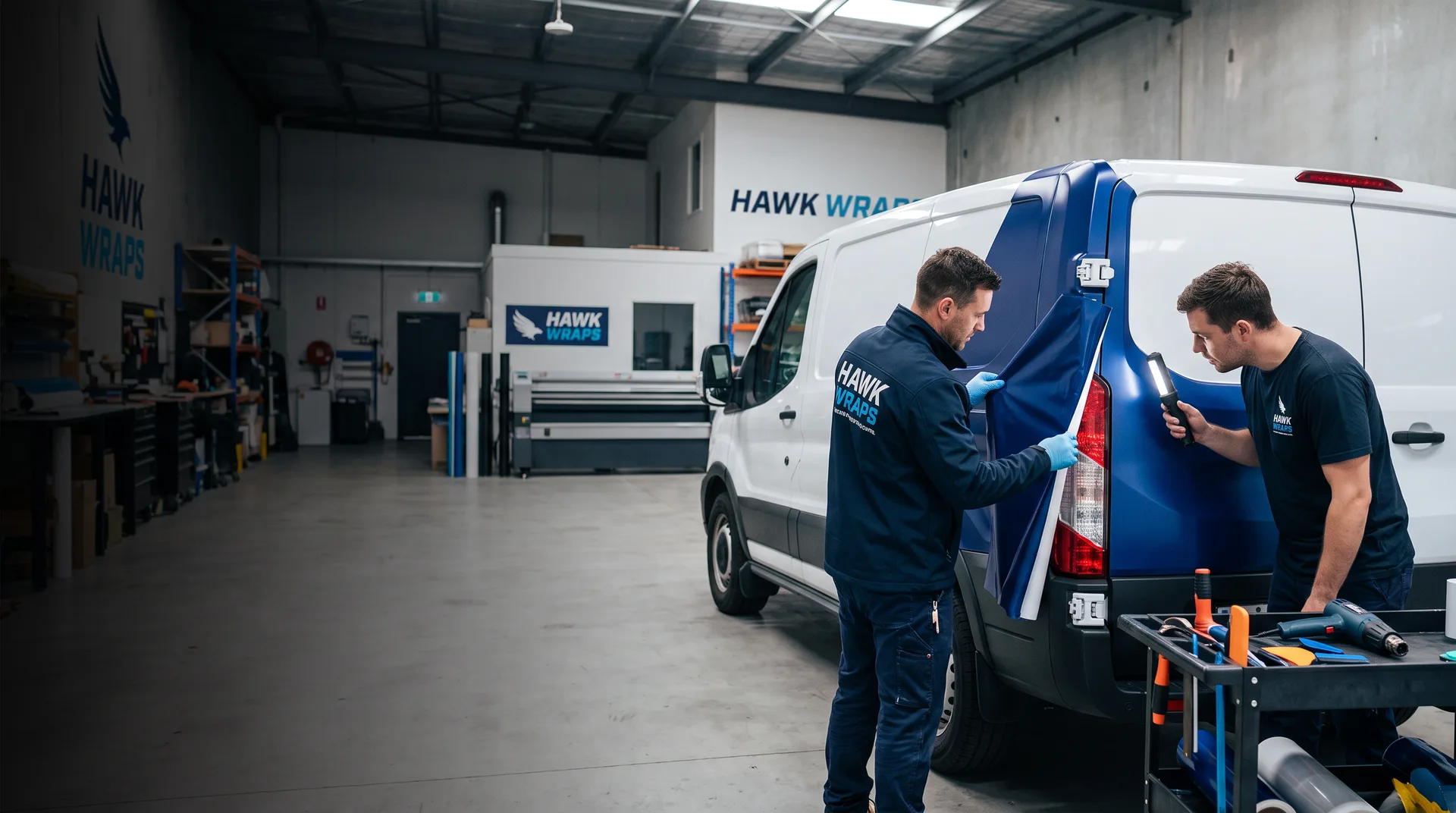
Single-vehicle and small projects come to our 10,000 sq ft climate-controlled facility in Linden, NJ. For fleet projects of 10+ vehicles based at a single yard, we offer mobile installation on-site — our team brings the necessary equipment and a temporary controlled work area. Mobile service adds a trip charge depending on distance, which varies by service area.
Do I need to do anything to prepare my vehicle?
Bring the vehicle clean — preferably hand-washed within 48 hours of drop-off. Remove any personal items from the exterior (magnetic signs, license plate frames, decals). For service vehicles, ladder racks can stay on (we template around them) or can come off if you want full surface access. We do the rest.
Can you wrap in cold weather?
Our install bays are climate-controlled, so we install year-round at consistent quality. The vehicle does need to acclimate to bay temperature (usually 60–70°F) before installation begins — that adds a few hours for a cold vehicle in winter. Some fleet customers actually prefer winter installs because their operations are slower and our scheduling is more flexible.
Can you wrap around ladder racks, shelving, and hardware?
Yes. We routinely wrap service vans equipped with Adrian Steel, Prime Design, Holman, and Ranger Design ladder racks, plus interior shelving systems visible through windows. Our template library accounts for the mounting hardware. If a design requires full-surface access, we can remove and reinstall most racks as part of the project (adds 2–3 hours).
Maintenance & Care
4 questionsHow do I wash a wrapped vehicle?
Hand wash with mild soap (Dawn dish soap is fine) and a soft cloth or mitt, or use a brushless touchless car wash. Avoid high-pressure washing within 6 inches of wrap edges. Don't use abrasive brushes, polishing compounds, or wax products not specifically rated for vinyl wraps.
Can I use wax on a wrap?
Standard automotive wax — no, it can damage the laminate. Use products specifically labeled "safe for vinyl wraps" (3M makes one, Meguiar's makes a wrap-safe sealant). These restore gloss and add a protective layer without harming the vinyl. Applying every 2–3 months extends premium appearance significantly.
What if a panel gets damaged?
We maintain your design files for the lifetime of the relationship. If a vehicle is in an accident or a panel gets damaged, we can reprint and reinstall the affected panels at single-panel pricing — typically $300–$800 per panel depending on size and complexity. Color match is exact because we still have the original file.
Does sun exposure affect a wrap?
UV-protective laminate is included on every wrap we install, which significantly slows fading. Premium cast vinyl with UV laminate holds color for 5–7 years in NJ/NYC climate. Garaged vehicles retain color longer. Vehicles parked outside in full sun year-round see the shorter end of that range.
Fleet Programs
3 questionsHow does a fleet wrap rollout work?
Discovery and design happen first, followed by a pilot vehicle when the rollout requires one. Production then runs in scheduled batches through our Linden studio, with vehicle intake staggered so most of the fleet can remain in service. Batch size and timing are confirmed after the vehicle mix, condition, coverage, and operating schedule are reviewed.
How are color and design consistency maintained across batches?
Every fleet wrap is printed to a master proof with verified Pantone or PMS color matches. We run printer calibration logs across batches and color-match validation at every batch transition. Van #1 wrapped in February looks identical to van #25 wrapped in May.
Do you have a dedicated project manager for fleet projects?
For fleet projects of 10+ vehicles, you get a dedicated PM as a single point of contact. They own the rollout schedule, color match across batches, coordination with your operations team, vehicle drop-off scheduling, and weekly progress reports. Smaller fleet projects (3–9 vehicles) are handled by our operations team with one assigned coordinator.
Authority, License & Unit Information
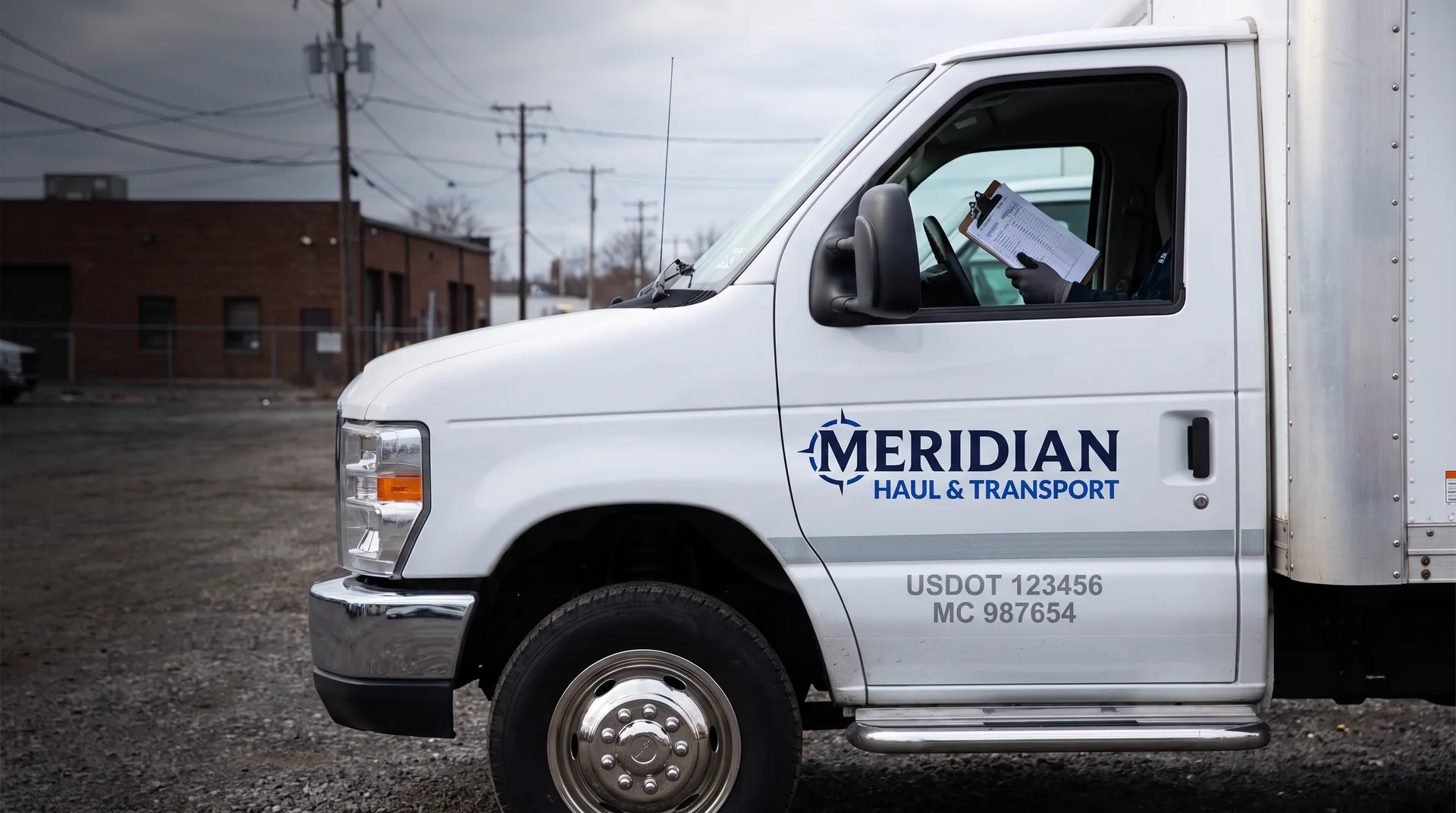
3 questionsHow do I know which vehicle markings my operation needs?
Requirements can depend on the legal entity, vehicle, weight, cargo, route, authority, trade, and jurisdiction. Confirm current obligations with the relevant agency or qualified adviser. Hawk Wraps does not decide which rules apply.
Can you place USDOT, MC, GVWR, unit, or other operator-supplied information?
Yes. We can organize owner-supplied legal names, authority numbers, weight data, unit IDs, and related information within the graphic system. The operator must verify the current content, dimensions, contrast, and placement before approving production.
Can you add trade-license or registration information?
Yes. Supply the approved license, registration, certification, or program information and any current display instructions. The customer is responsible for confirming accuracy, authorization, and applicable requirements.
Leased Vehicles
2 questionsCan I wrap a leased vehicle?
Possibly. Obtain the lessor’s written modification and return requirements before installation. We can recommend removable film and document the project, but paint condition and lease-return acceptance cannot be guaranteed.
What happens at lease return?
Follow the lessor’s current instructions and schedule an inspection before removal. Removal results depend on the original surface, repairs, film, age, exposure, and removal conditions. The leasing company—not Hawk Wraps—determines return acceptance.
Wrap Removal
3 questionsDo you remove wraps?
Yes — wrap removal is a separate service offered for our own installations and for third-party wraps subject to inspection. Pricing depends on vehicle size, wrap age, vinyl type, and installation condition. See the Wrap Removal page for ranges, our process, and how the inspection step works.
Will you remove a wrap from another shop?
We accept third-party wrap removals subject to inspection. Because we don't know the original vinyl, installation method, or surface condition, we evaluate each job individually before quoting. The inspection happens before the removal — you'll know what to expect before any work starts.
Can I get a combo discount for removal + new wrap?
Yes. 10–15% combo discount when you bundle removal with new wrap installation in the same project. The vehicle goes through removal first, design and prep for the new wrap happen in parallel, install completes as one continuous workflow. Saves both time and money versus separate appointments.
Question Not Listed Here?
We'd rather answer it than have you guess. Call, email, or send a message — quote requests included.