Custom Food Cart Wraps
for Clear Street-Level Branding
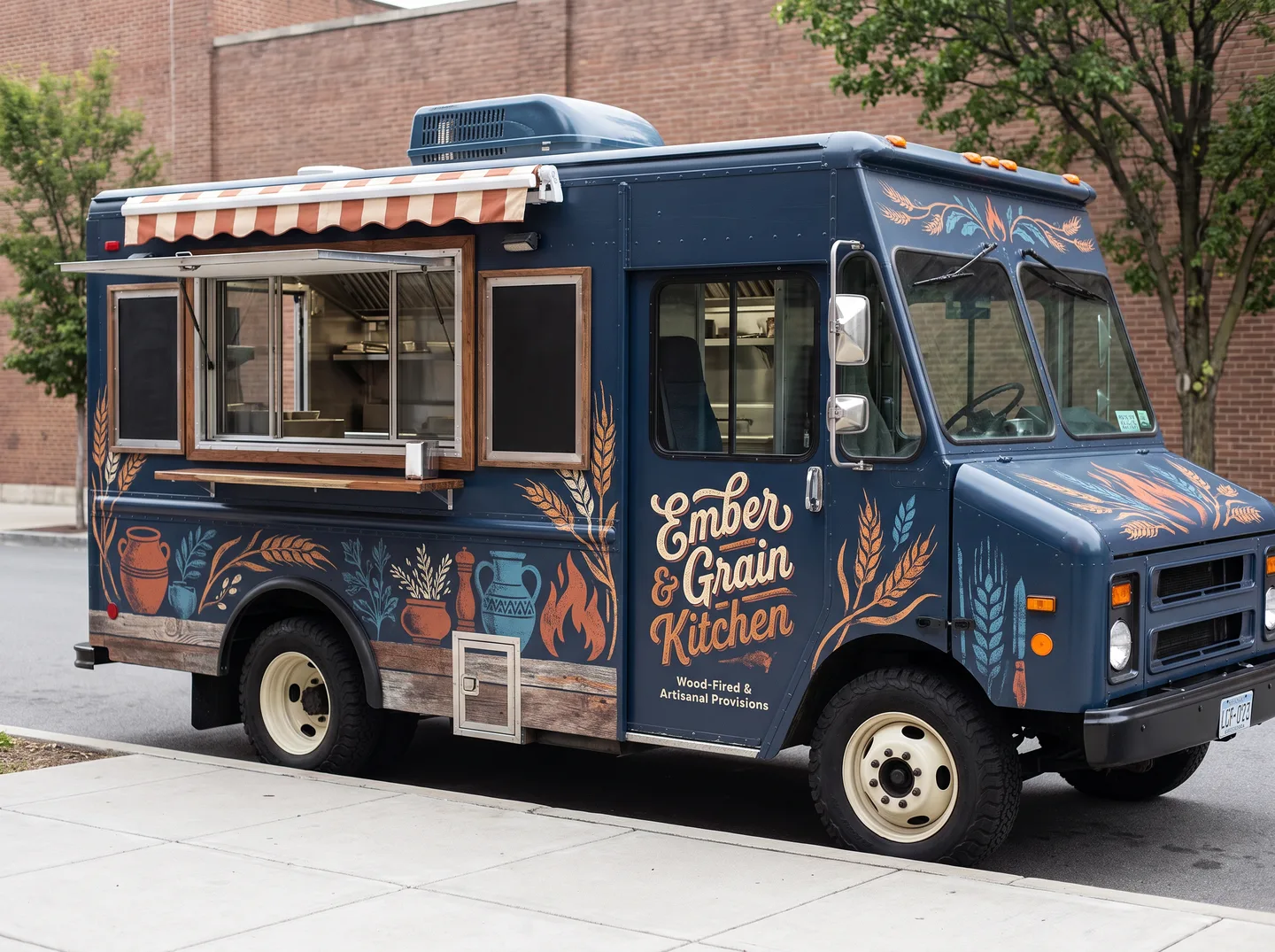
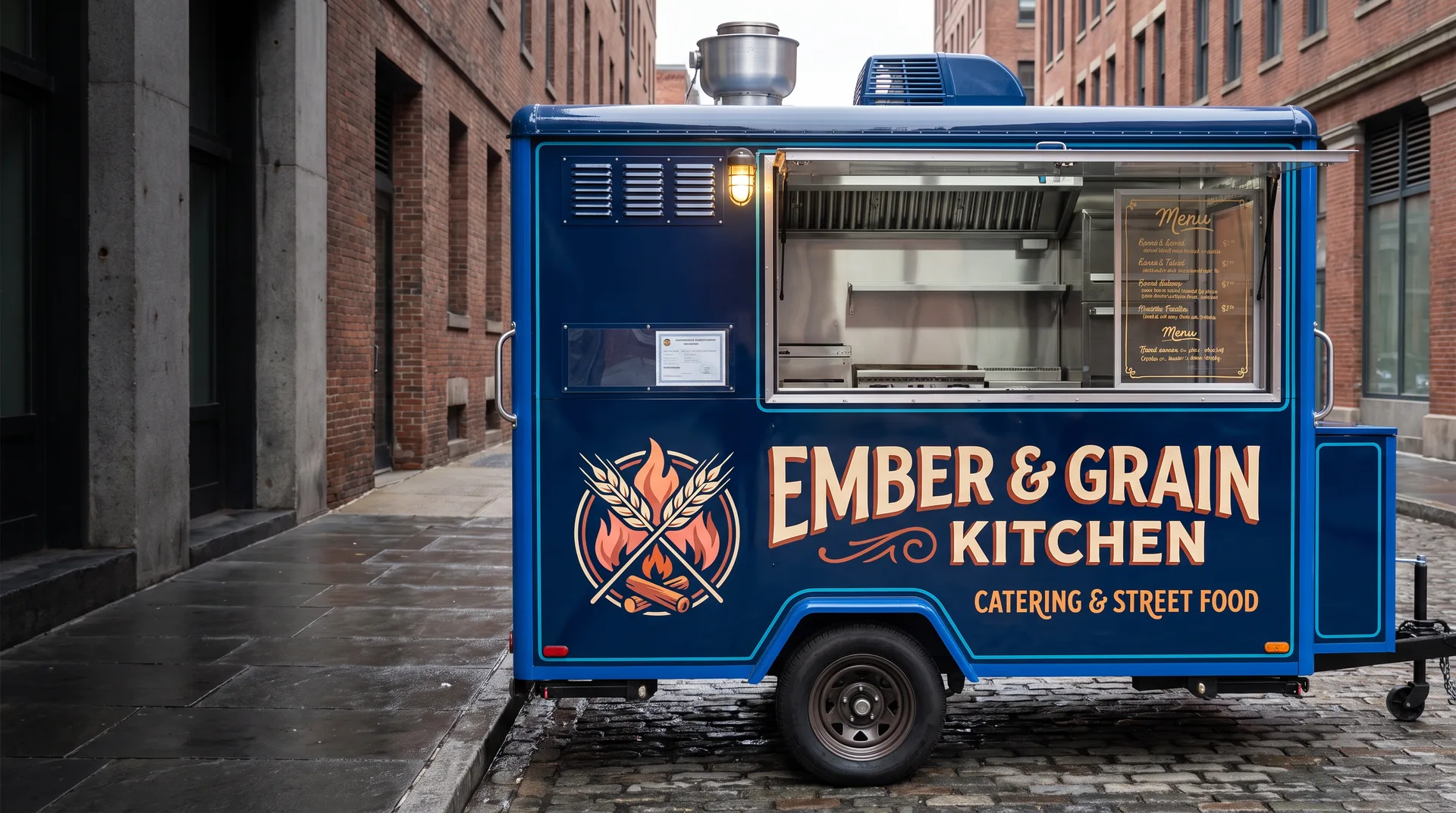
Turn compact panels into a clear brand, cuisine, ordering, and menu system for street carts, concession kiosks, coffee counters, dessert pushcarts, market stands, and event carts. We design around service openings, wheels, handles, vents, equipment, heat zones, cleaning access, and operator-approved display requirements, then produce the graphics in-house in Linden, NJ.
A Small Cart Needs a Stricter Message Hierarchy
A food cart has less room than a truck, yet it may need to communicate the brand, food or beverage category, ordering point, menu, prices, payment information, pickup flow, and operator-supplied license or permit details. The answer is not smaller text everywhere. It is deciding what must be understood from several steps away and what belongs at the counter.
Cart construction also changes the usable surface. Stainless steel, painted metal, composite panels, plastics, counters, shutters, handles, wheels, vents, hot zones, hinges, fasteners, canopies, and removable equipment each require a different coverage decision. Vinyl is not a heat shield, and no film should be applied where direct flame, excessive surface temperature, cleaning, movement, or service access makes it unsuitable.
Menus and regulatory information can change more often than the core identity. We plan durable brand areas separately from update zones, then incorporate only the display requirements the operator has confirmed with the appropriate health, fire, vending, event, property, or local authority.
Graphics for Street Carts, Kiosks and Mobile Counters
Every cart should be reviewed by its construction, equipment, operating environment, customer flow, and approved display needs—not just its menu category.
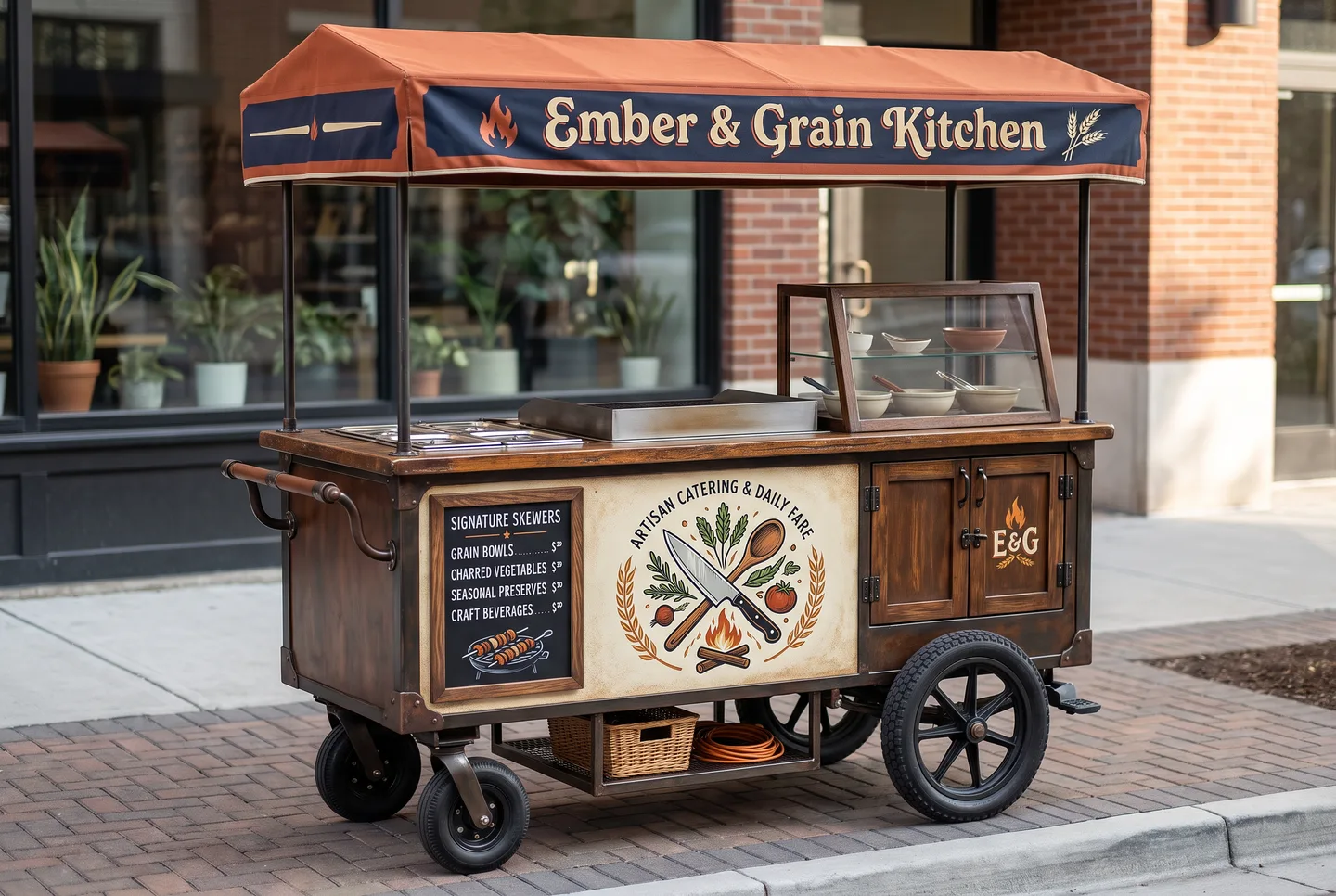
Compact Street Cart
Pushcarts and compact sidewalk units with limited panels, handles, wheels, canopies, and service equipment.
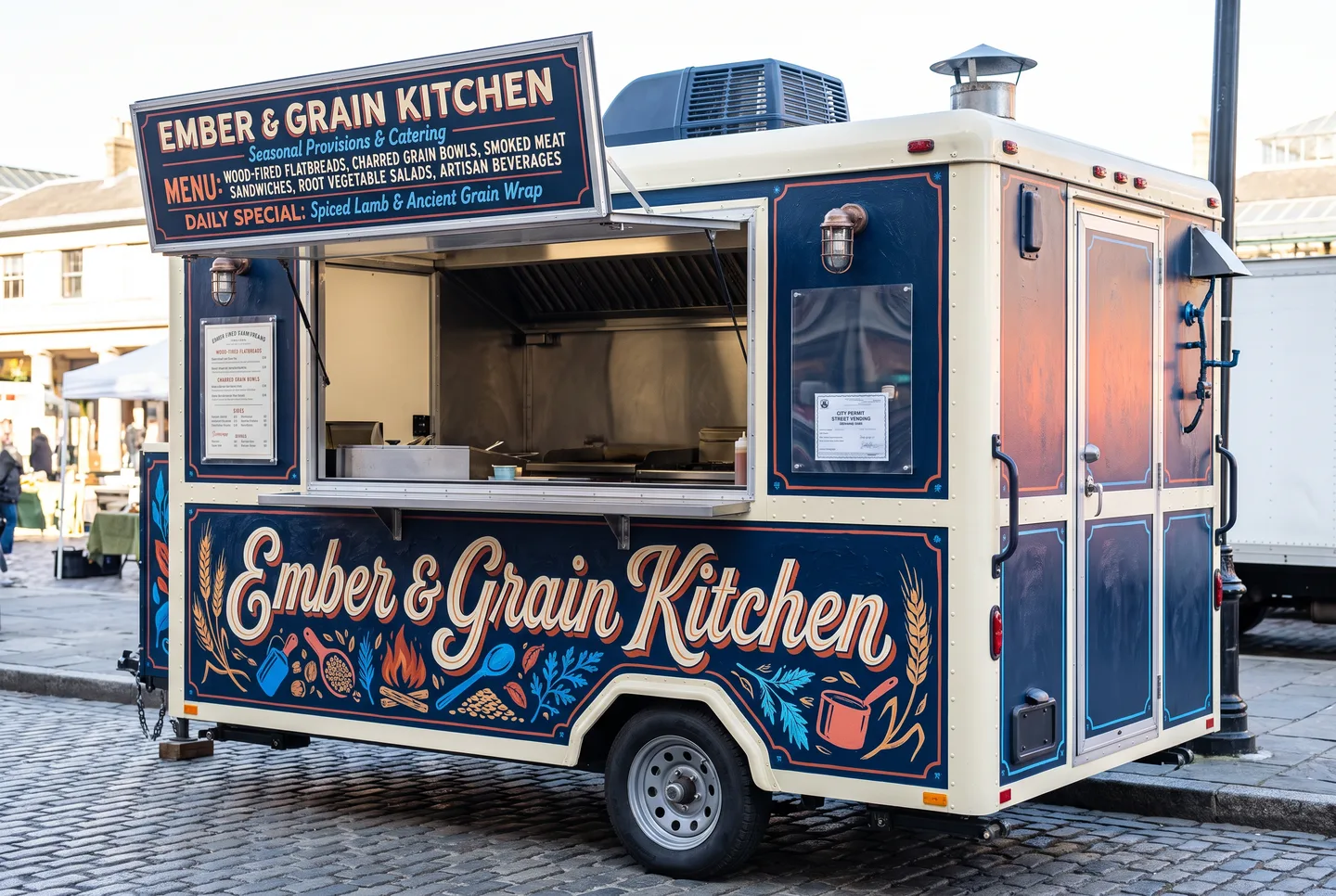
Enclosed Food Cart
Larger street-vending carts with side walls, counters, shutters, ventilation, utilities, and storage access.
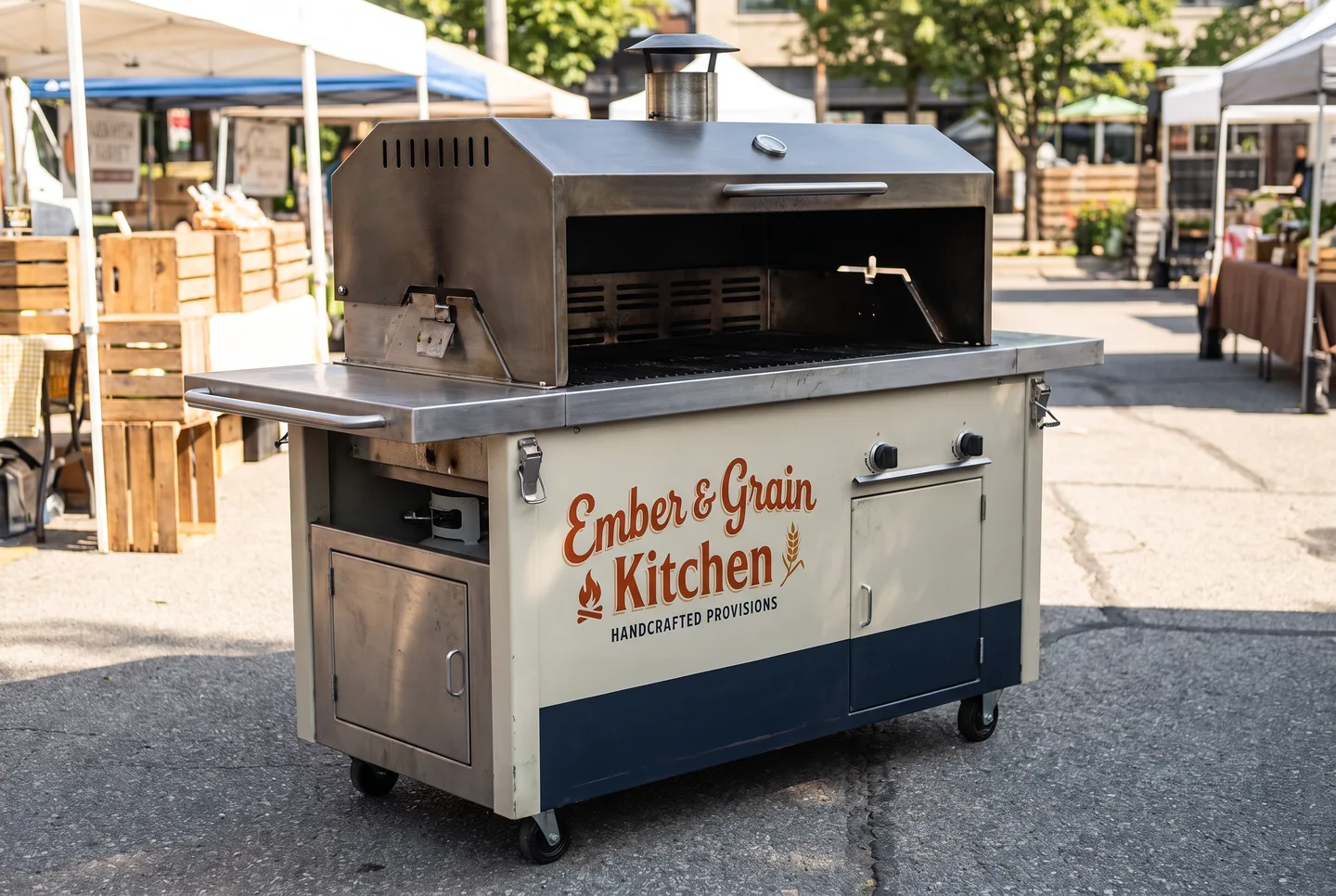
Grill / Kebab Cart with Hood
Cooking carts with hoods, grills, rotisseries, fryers, steam equipment, exhaust, and grease exposure.
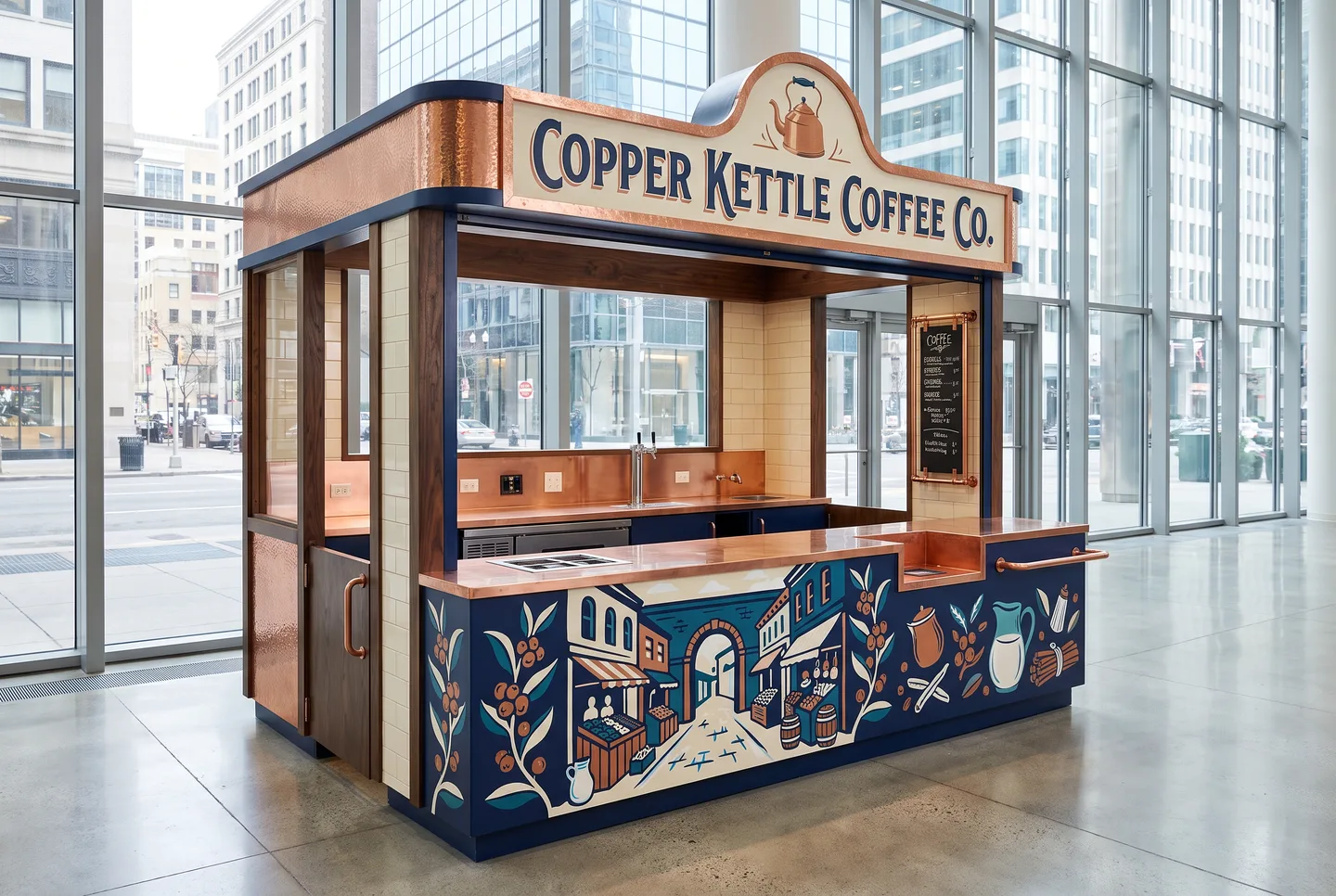
Coffee / Beverage Kiosk
Counters and kiosks with espresso, beverage, refrigeration, power, water, display, and menu equipment.
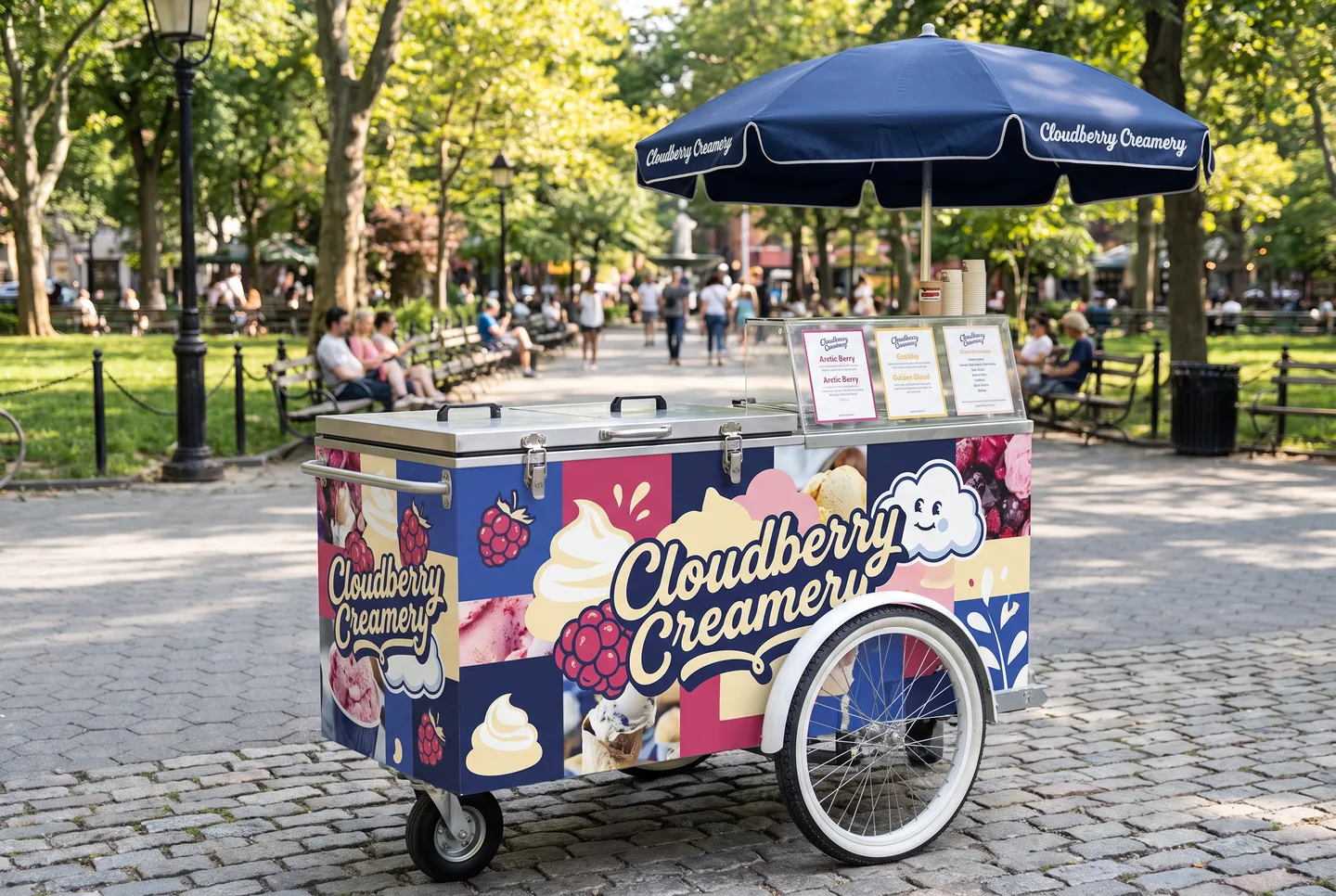
Ice Cream / Dessert Pushcart
Cold-service carts with lids, freezers, insulated bodies, display areas, and high-touch handles.
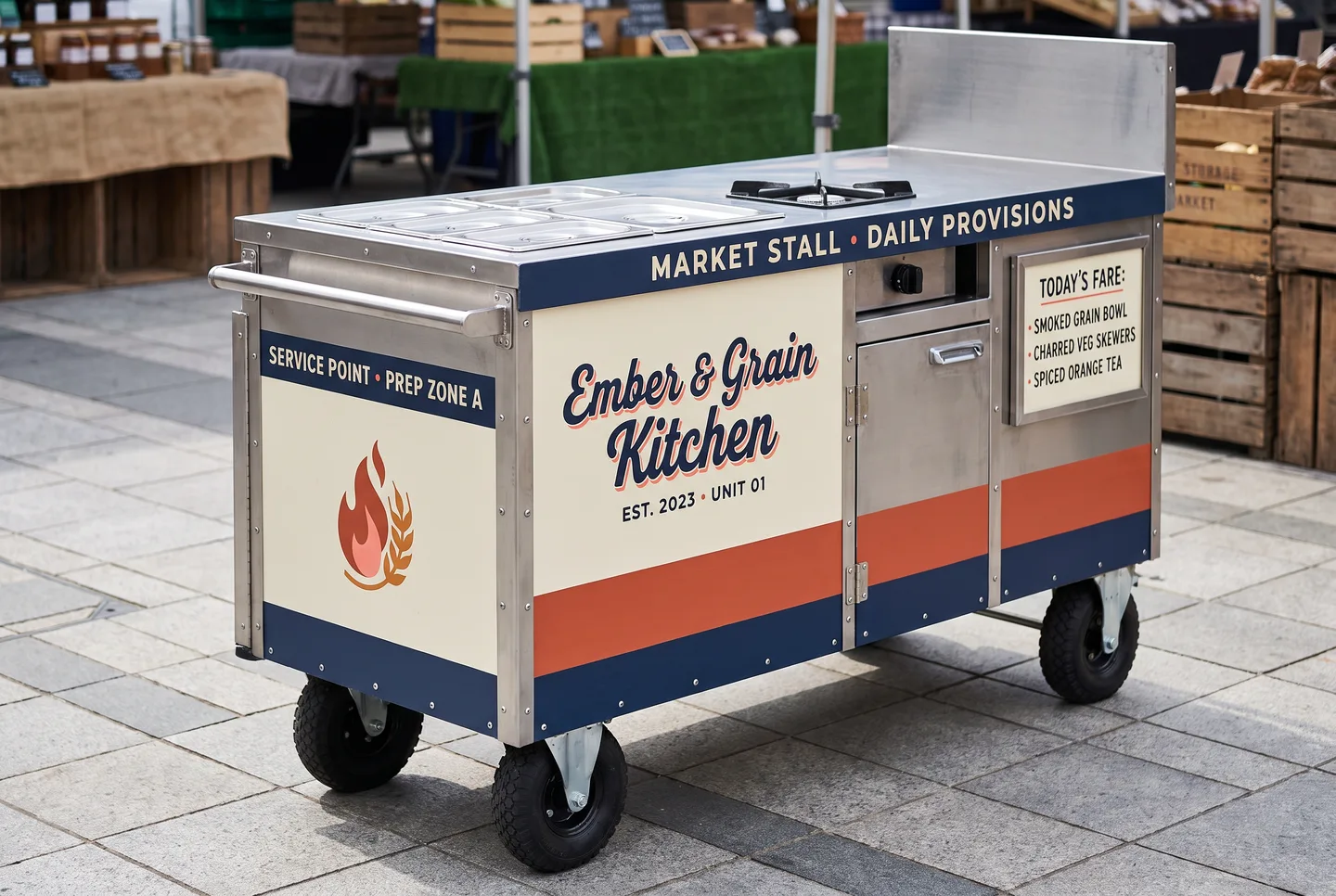
Targeted Lettering & Decals
Focused identity and information graphics for compatible cart panels when full coverage is unnecessary.
Give Every Panel a Clear Job
Build the layout from distance recognition to counter-level details, while preserving equipment, hot zones, access, and operator-approved information.
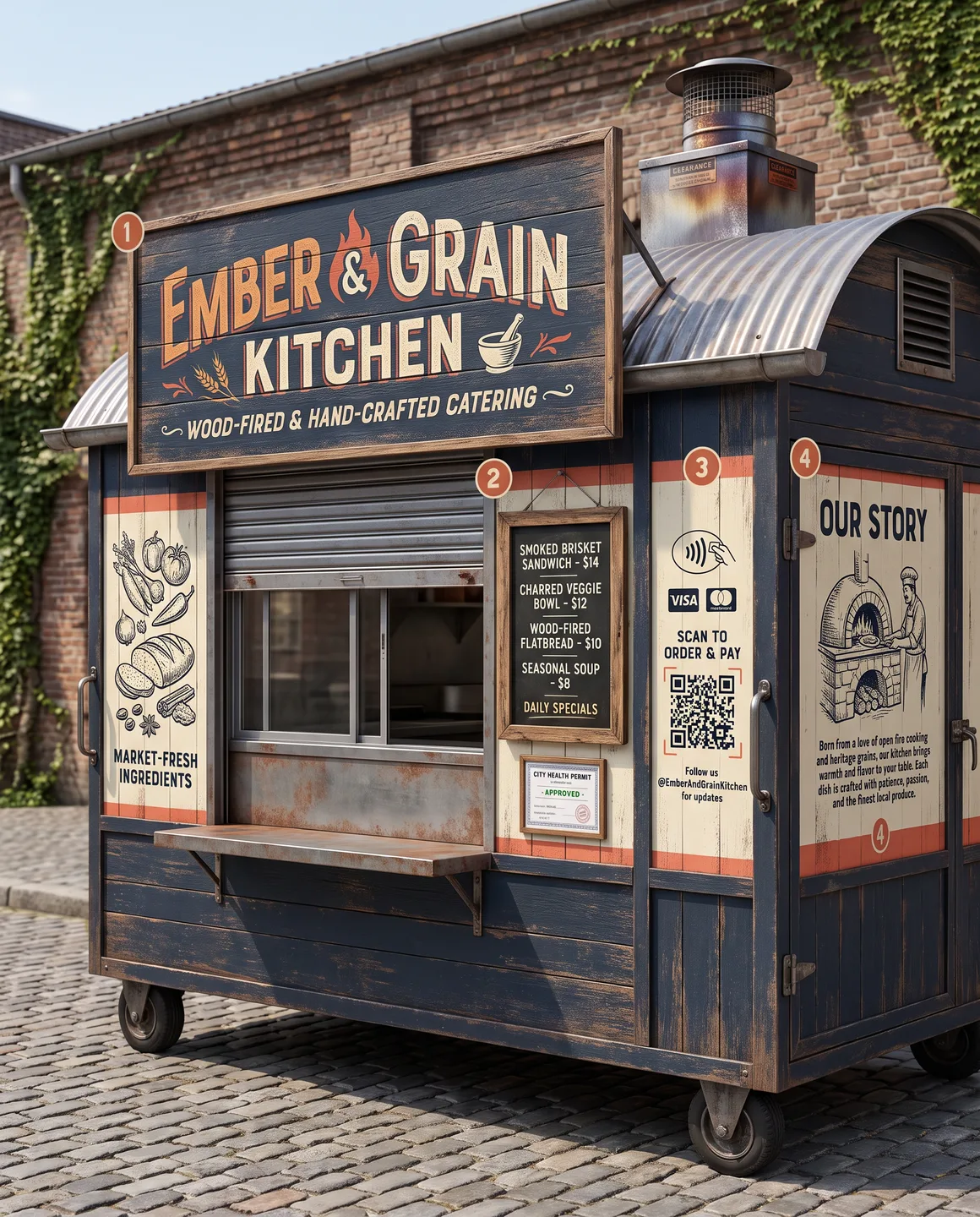
1Brand & Category
Use the largest, clearest zone for the cart name and a simple food or beverage cue. A strong wordmark, restrained illustration, or owned product photography can help; invented claims and stock imagery should not substitute for the real offer.
2Ordering & Pickup Orientation
Frame the service opening and make the customer-facing side obvious without covering shutters, handles, counters, hinges, hot zones, vents, or moving equipment.
3Changeable Menu Zone
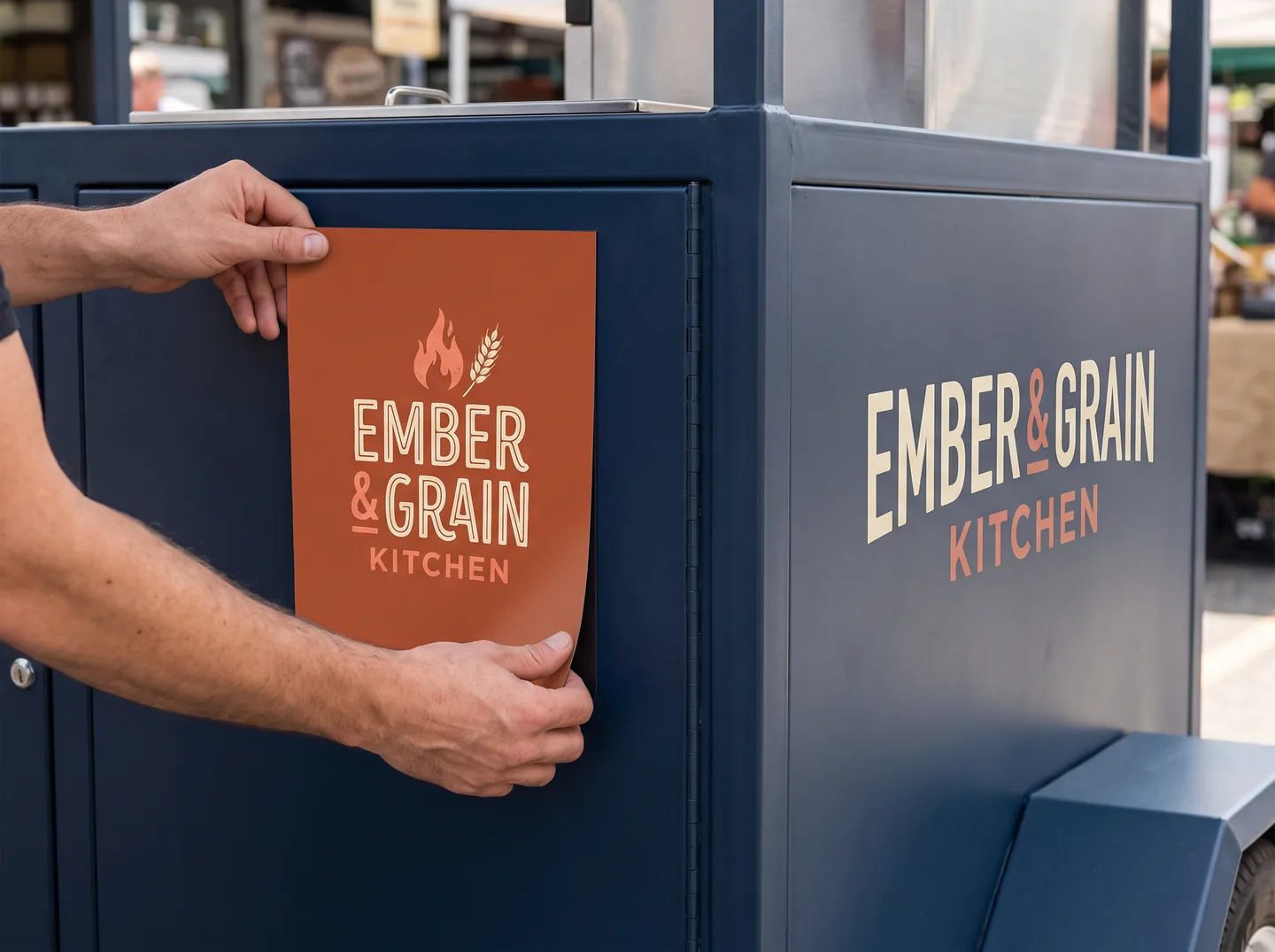
Reserve an appropriately sized area for current items and prices. Material, mounting, heat, grease, weather, cleaning, panel compatibility, and update frequency determine whether a rigid, clip-in, magnetic, or decal solution fits.
4Approved License & Permit Areas
The operator supplies the current required content, size, contrast, location, mounting method, and clear zones after confirming them with the relevant authorities. The layout preserves those approved areas.
5Verified Payment Information
Show only payment methods the cart actually accepts and use authorized brand assets. Keep this counter-level information secondary to the cart identity and ordering flow.
6Response Path
A short URL, social handle, or tested QR code can connect customers to an online menu or schedule. Final codes and destinations should be supplied, tested at print size, and verified again after installation.
7Useful Supporting Story
When space allows, an accurate location, cuisine, ingredient, or business story can add context. It should remain brief, verifiable, and subordinate to the name, category, and ordering information.
Food Cart Wrap Cost Factors
Cart size is only one variable. Construction, equipment, heat, access, surface condition, old graphics, artwork, update zones, and installation logistics also shape the scope.
| Cart Type | Useful Graphic Areas | Quote Considerations |
|---|---|---|
| Compact street cart | Approved side, front and canopy panels | Panel material, handles, wheels, canopy, equipment, hot zones and limited space |
| Enclosed food cart | Side walls, counter front and approved shutters | Dimensions, seams, openings, vents, utilities, lighting, permits and menu strategy |
| Grill / kebab cart with hood | Cool exterior panels outside required clearances | Measured surface temperature, hood, flame and grease exposure, ventilation and fire rules |
| Coffee / beverage kiosk | Counter front, side panels and approved enclosure areas | Taps, refrigeration, drains, power, doors, menu updates, indoor or outdoor location |
| Ice cream / dessert pushcart | Body shell, lid surround and approved display panels | Curves, insulation, lid travel, handles, cold surfaces, condensation and storage |
| Lettering / targeted decals | Selected clean, compatible panels | Artwork, line count, production method, surface texture, removability and update plan |
Send clear photos with the cart open and closed, overall dimensions, close-ups of every proposed panel, material information, equipment and heat-source locations, old-graphic condition, menu plan, approved display requirements, cart quantity, operating environment, current location, and target date. We will recommend coverage and quote the actual scope rather than applying a universal cart price.
From Cart Review to Approved Installation
Cart & Surface Review
We review dimensions, construction, panel condition, old graphics, service openings, equipment, hot zones, ventilation, access, operating environment, and transport logistics. The owner or builder identifies required technical clearances.
Message Plan & Proof
The layout assigns clear roles to distance branding, service-side information, changeable menus, and operator-approved display areas. Proofs reflect the actual cart open and closed, and production follows written approval.
Material Selection & Production
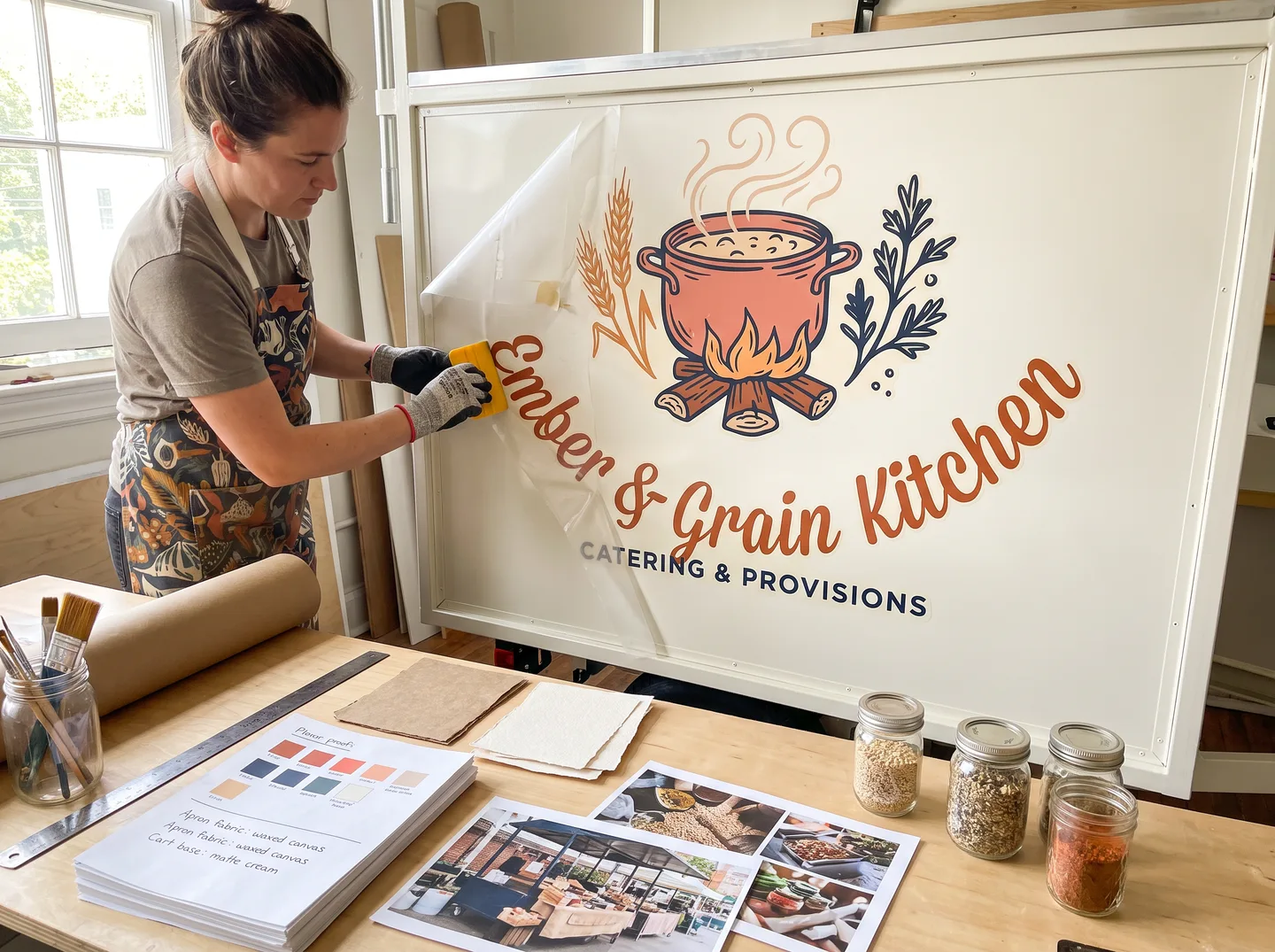
We select compatible graphic materials based on the approved panels, substrate, environment, cleaning, heat exposure, duration, and manufacturer guidance, then print, finish, label, and stage the graphics in-house.
Preparation, Installation & Review
Approved surfaces are cleaned and prepared, then graphics are installed without obstructing the specified equipment, moving parts, access, or clear zones. The operator completes any required inspection before returning the cart to service.
Food Cart Wrap FAQs
Will the wrap survive heat from the grill or fryer?
Will it survive grease, pressure-washing, and constant wiping?
Will the wrap interfere with my NYC DOHMH permit?
Can you wrap the cart at my commissary or do I bring it to you?
How long does a food cart wrap last?
Can I update the menu later without redoing the whole wrap?
What about second/third carts — can you match a fleet?
Food Cart Wrap Reviews
Recent feedback from Hawk Wraps clients across New Jersey, New York, and Connecticut.
Our coffee cart needed a complete refresh before the busy season. Alex helped simplify the branding while making it much more noticeable from a distance. The graphics fit perfectly around every panel and storage compartment, and the finished cart looks far more professional than before.
Even though it was a relatively small project, Gabby treated us like a major client. Communication was excellent throughout, and the finished graphics completely changed the appearance of our cart. People now recognize us immediately at community events and local markets.
After years of faded graphics, we finally decided to update the cart. Tito suggested a cleaner layout that made our branding much easier to see without overcrowding the space. The installation was neat, durable, and completed faster than expected. Very happy with the outcome.
We wanted colorful graphics that would appeal to families without looking cheap. Alex understood exactly what we were trying to accomplish. The colors are vibrant, the finish is smooth, and the cart now gets noticed everywhere we take it during the summer.
This was our first experience working with a wrap company, and everything was straightforward from start to finish. Luis kept us updated during production, and the installation exceeded expectations. The cart looks brand new, and customers frequently comment on how clean and professional it looks.
Get a Food Cart Wrap Quote
Tell us about the cart, construction, dimensions, equipment, hot zones, current graphics, menu plan, approved display requirements, location, and target date. Photos with the cart open and closed help us review the scope.